Step Up Your Stair Game Without Tripping on the Budget
Are you trying to figure out what the real starting step cost looks like once you factor in materials, design, and installation?
And are you wondering whether upgrading that first step is actually worth it for your home?
In this guide, you’ll learn what starting steps cost, how wood species and design choices affect pricing, and what to expect when integrating one into your staircase design.
By the end, you’ll understand how to choose the right starter step for your stairs with clarity and confidence.
Starting Step Cost Overview
Let’s get straight to it.
Material-only pricing for a starter step typically ranges from $215–$1,050+, depending on wood species, width, thickness, and whether you choose a single-end or double-end profile.
Entry-level options sit at the lower end. Premium wood and larger dimensions can push pricing well past $1,000 before installation.
If your starting step is part of a broader staircase remodel cost evaluation, pricing often aligns with structured project packages.
Stair Creations offers stair remodeling starting at $4,000 for a slight refresh of a single staircase, including new LVP flooring and painting touchups, typically completed within 1–2 weeks. We review pricing with you during phone consultations and on-site consultations so you understand what your project includes before moving forward.
The bottom line: your starting step cost depends on materials, design complexity, and whether it stands alone or is integrated into a full staircase upgrade.
What Is a Starting Step?
Definition and Purpose
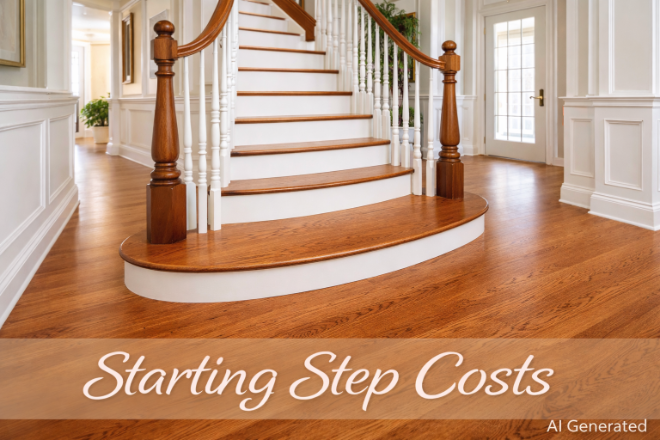
A starting step, also called a starter step, is the decorative first step at the base of your staircase.
It is usually wider and deeper than the other treads and may feature a curved cove detail on one or both sides.
This first step sets the visual tone for your entire stairway. It adds character and elegance while still maintaining functionality and safety.
The tread depth, riser height, and overall proportions must work together, as explained in this stair tread size guide, to ensure your stairs feel balanced and secure.
When properly designed and crafted, a starting step transforms the entry of your staircase into a focal point rather than just another structural component.
Types of Starting Steps
You have several style options.
A single-end starter step features a decorative curve on one side only. This works well when one side of the staircase sits against a wall.
A double-end starting step includes curves on both sides and is often used when both sides of the staircase are visible.
A false-end starter step adds a decorative edge to one side of a standard tread and typically comes at a more limited price point.
You may also hear terms like left-hand or right-hand starting step. These indicate which side of the staircase receives the decorative curve. Choosing the correct orientation ensures your staircase design flows naturally from the first step upward.
Material Costs by Wood Species
Your choice of wood has one of the biggest impacts on the starting step cost.
Poplar
Poplar is generally considered an entry-level hardwood option. Pricing for a 48-inch profile typically falls in the ~$500 range.
It is a budget-friendly choice, especially if you plan to paint the tread. However, poplar is softer than oak, so durability should be considered in high-traffic areas.
Red Oak
Red oak is a common choice for traditional staircase design. Product pricing typically falls between ~$580–$600.
It offers a strong balance of quality, availability, and price. Red oak stains well and can easily match existing wood floors, making it a practical and versatile option.
White Oak
White oak sits at the higher end of the pricing range, often around ~$950–$1,000.
It is denser than red oak and features a tighter grain pattern. If you are prioritizing durability and refined aesthetics, white oak is a strong contender.
Walnut
Walnut is a premium wood species, frequently exceeding $1,000 for a starting step.
It is selected for its rich color and distinctive grain. If your staircase is meant to make a statement, walnut can dramatically enhance its appearance.
Cost Differences by Starting Step Style
Single-End Starting Step
A single-end starter step typically starts at $500+, depending on wood species and width.
It delivers visual appeal without the additional material cost of a double-end design. This style works best when one side of the staircase is enclosed.
Double-End Starting Step
A double-end starting step uses more material and requires more detailed fabrication.
As a result, the starting step cost increases.
In open staircases or larger entryways, this design creates symmetry and makes the first step feel substantial and intentional.
False-End Starter Step
A false-end starter step typically ranges from $215–$600.
It provides a decorative upgrade without the expense of a fully extended tread. If your budget is limited but you still want enhanced aesthetics, this can be a smart solution.
Size and Dimension Impact on Cost
Width and Length
Width directly affects cost.
A wider, deeper tread requires more wood and additional milling.
If your staircase design calls for a dramatic, oversized first step, expect material pricing to increase accordingly.
Thickness
Thicker treads require more raw material and can increase fabrication and shipping costs. Heavier components may also affect installation labor.
Custom Profiles
Custom curves, extended cove details, and unique edge treatments increase the time required for craftsmanship.
More intricate fabrication naturally raises total cost.
Stair Creations has been serving homeowners since 2017, providing stair fabrication and custom design services. During the design phase, we help you select materials and can provide renderings upon request, so your starting step aligns with your overall staircase vision.
Finishing and Surface Treatment Costs
Unfinished vs Pre-Finished
Unfinished starting steps cost less upfront but require staining and sealing.
Pre-finished products increase the initial purchase price but may reduce on-site labor time. The right choice depends on your schedule and project scope.
Staining and Sealing
Professional staining and sealing protect your wood from wear while enhancing color and grain.
Stair Creations offers stair staining and sealing services with custom color options and finishes designed to enhance the natural beauty of the wood while protecting it from wear and tear. We guide you through material selection during the design process so your finished staircase feels cohesive.
Specialty Coatings
UV-resistant and specialty coatings add cost but increase long-term durability.
If your staircase receives direct sunlight, these coatings can help maintain its appearance over time.
Installation Costs
Labor for Removal and Replacement
Replacing stair treads increases labor requirements.
Removing old treads and risers, adjusting framing, and ensuring proper height alignment add complexity.
Installation is about more than appearance. It ensures safety and long-term structural integrity.
Integration with Railing Installation
Your starting step often connects directly to your railing system.
If you are upgrading balusters, handrails, or other components, additional coordination is required.
Stair Creations installs stair railings using materials such as wrought iron, stainless steel, glass panels, and wood. We guide you through handrail profiles, baluster selection, and custom finishes to ensure your starting step integrates seamlessly with the rest of your staircase.
Custom Staircase Modifications
If you modify the framing or alter the overall stairway structure, installation becomes more involved, increasing the total project time.
Stair Creations follows a structured process that includes phone consultations, on-site consultations with a design fee applied toward your final project, pre-job walkthroughs, and post-job walkthroughs. We also provide a 5-year warranty and follow-up schedule to help ensure your staircase remains in excellent condition.
Additional Cost Factors
Wood Market Fluctuations
Wood species pricing changes based on supply and demand.
Premium materials may fluctuate more significantly.
Understanding this helps you plan realistically before placing your order.
Shipping and Freight
Large or heavy treads can increase freight costs.
Solid hardwood components add weight, which impacts shipping pricing if products are shipped separately.
Lead Times
Custom-crafted starting steps may require extended production time.
Specialty wood species with limited availability can increase lead times.
Planning ahead ensures your project stays on schedule.
Budget Planning for a Starting Step Upgrade
Material-Only Budget
If you are purchasing a starting step on its own, expect pricing between $215–$500 for entry-level options and over $1,000 for premium wood species.
These figures do not include installation or finishing.
Integrated Remodel Budget
If your starter step is part of a broader staircase upgrade, pricing may align with structured remodel packages.
High-End Custom Projects
If you select a double-end starting step in a premium wood species and integrate custom railing components and specialty finishes, your starting step cost becomes part of a larger investment.
At that point, you are not just upgrading steps.
You are investing in craftsmanship, safety, and long-term functionality that enhances both your daily experience and your home’s value.
Where Every First Step Sets the Tone With Stair Creations
Upgrading your starting step is more than a design decision. It is an investment in quality craftsmanship, structural integrity, and long-term functionality that enhances your entire staircase.
With expert fabrication, detailed design guidance, and coordinated installation services, Stair Creations can help you transform your first step into a defining feature of your home.
If you are ready to upgrade your staircase with confidence, fill out our contact form today or give us a call. Let’s design a starting step that brings durability, elegance, and lasting value to your home.