Step Up Your Stair Game: Discovering Stair Tread Options
Have you ever wondered what makes a staircase look both stylish and sturdy? Are you curious about the different types of stair treads and which one might be perfect for your Fairfax, VA, home?
In this post, you’ll learn all about the various stair tread materials and styles available.
By the end, you’ll know exactly which type suits your home best and how to make an informed decision for your Fairfax staircase remodeling project.
What Are Stair Treads?
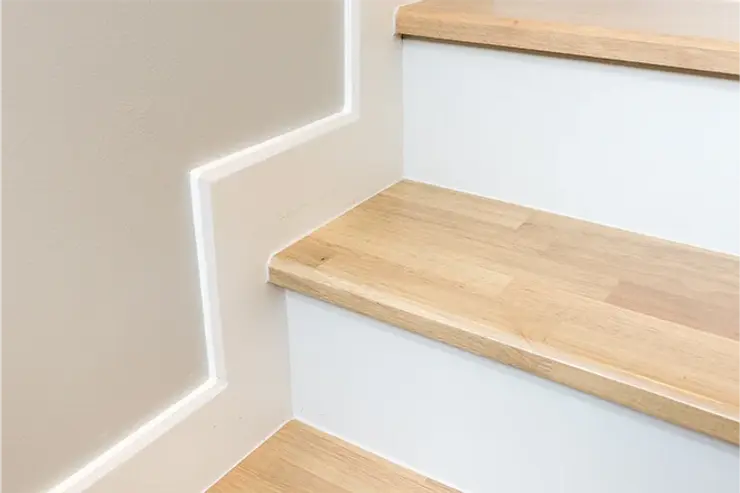
Stair treads are the horizontal parts of a staircase where you place your feet. They are crucial for both safety and design, providing a functional surface for walking while also contributing to the overall style of your home.
You may want to reference this staircase terminology (with pictures) page.
7 Types Of Stair Treads By Material
1. Wood Treads
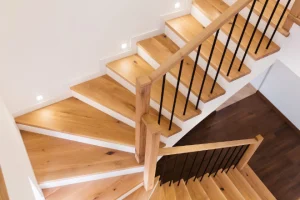
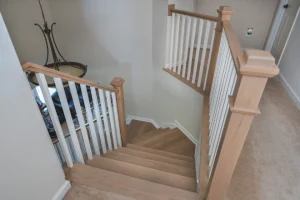
Wood stair treads are a timeless choice, exuding warmth and natural beauty. For interior stairs, options like red oak stair treads and white oak stair treads are popular due to their durability and attractive grain patterns. The selection of wood species can dramatically influence your staircase’s aesthetic and functional qualities.
Interior Wood Treads
- Red Oak: Red oak is known for its reddish-brown color, which gives it a robust and warm aesthetic. It is considered one of the strongest and most durable hardwoods. Its medium bending strength and heavy weight make it ideal for high-traffic areas. Red oak stair treads add a touch of tradition and elegance to your home’s interior.
- White Oak: Slightly lighter in color than red oak, white oak features a straighter, more linear grain that suits modern designs. This hardwood is also very durable, although it is not recommended for outdoor use as it can darken with exposure to weather. White oak stair treads are perfect for creating a sleek, contemporary look.
- Hard Maple: Hard maple treads are characterized by their creamy white color with a slight reddish-brown tinge. Known for their high resistance to wear and abrasion, these treads are an excellent choice for busy households, ensuring longevity and maintaining their polished appearance.
- Walnut: Walnut is a tough hardwood with a rich, dark brown heartwood that is highly sought after for its luxurious appearance. Walnut stair treads bring a sophisticated and elegant feel to any staircase, although they can be more expensive due to the limited usability of the sapwood.
- Distressed Wood: Distressed wood, either reclaimed or mechanically stressed, offers a rustic charm and unique texture. This type of wood can add character to your staircase, especially in high-traffic areas where additional wear over time will enhance its rustic appeal.
- Brazilian Cherry: Known for its incredible strength, Brazilian cherry has rich, reddish undertones that add warmth and elegance to any room. However, due to its tendency to store water, it is not suitable for damp or high-humidity environments.
- Antiqued Knotty Pine: Antiqued Knotty pine is a softer wood that develops more character as it wears over time. It’s perfect for creating a cozy, rustic feel in your home, especially when matched with similarly styled decor.
Which stair tread is better: red oak or white oak?
Exterior Wood Treads
Choosing the right wood for exterior stairs is crucial due to exposure to the elements. Durability against weather and minimal maintenance needs are key factors.
Ironwoods (Ipe, Cumaru): Ironwoods like Ipe and Cumaru are known for their exceptional durability and resistance to weathering. These woods require regular oiling to maintain their natural beauty, or they can be left to age naturally to a silvery gray.
Redwood and Cedar: Redwood and cedar are excellent choices for exterior stair treads. These woods stand up well to weather and can age beautifully over time. Regular maintenance, such as oiling, helps preserve their appearance and extends their lifespan.
2. Glass Treads
Glass treads offer a sleek, modern look, making them a popular choice for contemporary homes in Fairfax, VA.
These treads can transform your staircase into a stunning architectural feature.
Glass treads come in various colors, patterns, and textures, allowing you to customize them to fit your home’s design.
One key consideration is safety—choosing non-slip surfaces is essential.
Additionally, incorporating LED lighting can enhance the visual appeal, creating a dramatic effect, especially in dim lighting conditions.
3. Tile Treads
Tile stair treads are durable and low maintenance, making them a great solution for busy households.
Tile treads are available in various patterns and colors, allowing for creative designs that complement the overall decor of your home. Modern tiles can mimic the look of wood, offering design flexibility while ensuring easy upkeep.
They are particularly suitable for areas that experience a lot of wear and tear, as they resist scratching and staining better than many other materials.
4. Composite Treads
Composite treads are resistant to fading, scratching, mold, and splintering. These treads require minimal maintenance and are perfect for modern staircase designs that prioritize durability and convenience.
Composite materials can simulate the appearance of natural wood or stone, offering aesthetic versatility without the upkeep. They are also ideal for outdoor stairs, standing up to the elements while maintaining their appearance.
5. Carpet Stair Treads
Carpet stair treads provide a soft and comfortable surface, making them a great option for homes with children or elderly residents. These treads add warmth and can significantly reduce noise, making your staircase quieter.
Carpet stair treads come in various colors, patterns, and textures, allowing you to customize the look to match your home’s decor. They also provide excellent slip protection, which enhances safety on the stairs.
Carpet stair treads are easy to install and can be a cost-effective solution for updating your staircase. They can be used to cover worn-out treads, giving your stairs a fresh, new appearance without the need for extensive renovations.
Additionally, they help protect the underlying wood or other materials from wear and tear, extending the life of your staircase.
Regular vacuuming and occasional deep cleaning are typically all that’s needed to maintain their appearance and functionality.
Are wood stairs or carpeted stairs better for your Fairfax home?
6. Stone Treads
Stone treads bring a natural and timeless quality to staircases. They are highly durable and can withstand significant wear.
- Bluestone: Bluestone is a popular choice for outdoor stairs due to its grayish-blue color and robustness. It blends naturally with outdoor landscapes and requires minimal maintenance, making it ideal for exterior applications.
- Limestone: Limestone treads are easily shaped and available in various colors, from honey creams to grays. They need to be sealed to prevent staining but offer a classic look that works well for both interior and exterior stairs.
- Travertine: Travertine is known for its durability and natural non-slip properties. This stone adds a touch of elegance to any staircase and is suitable for indoor and outdoor use, although it requires sealing to maintain its appearance.
- Brownstone: Brownstone is appreciated for its ease of shaping and warm, earthy tones. It’s a great option for exterior stairs, providing a unique and aesthetically pleasing look that complements many home styles.
7. Steel Treads
Steel treads provide an industrial style that pairs well with open-beam architecture and spiral staircases. They are strong, durable, and offer a unique aesthetic that stands out.
Steel treads can be customized with various slip protection options, such as diamond plate surfaces, metal grating, or perforated patterns, ensuring safety without compromising on style. They are particularly well-suited for modern and industrial-themed homes.
Types Of Stair Treads By Style
Closed (Box) Stair Treads
Closed stair treads, also known as box treads, are encased by walls or knee walls on both sides.
This style is perfect for a more enclosed, traditional look, providing a clean and polished appearance. Since they don’t have exposed edges, closed stair treads offer a seamless transition from the staircase to the walls.
Closed stair treads are crafted to fit snugly between the walls, making them ideal for staircases that are part of a larger, more enclosed stairway design. This style not only provides stability but also enhances the overall look of the stairs by hiding the stair stringers.
Open Stair Treads
Open stair treads create a more modern and airy look, perfect for contemporary homes. There are several types of open stair treads, each offering a unique style and functionality.
- Left Hand Open (Left Return): These stair treads have one side exposed (the left side) while the other side is against a wall. The exposed edges can be finished with a return nosing, which adds a decorative touch and increases safety by reducing sharp edges.
- Right Hand Open (Right Return): The opposite of left-hand open, right-hand open stair treads have the right side exposed. The right return nosing provides a finished look and enhances safety.
- Double Return: These treads have both sides exposed, making them perfect for staircases that are open on both sides. Double return stair treads create a balanced and symmetrical appearance, enhancing the staircase’s overall aesthetic. They are particularly suited for spiral staircases or central staircases that serve as a focal point in the home.
Starter Steps
Starter steps, or starter treads, are the first steps in a staircase and are often wider and more decorative than the other treads. They can feature elegant curves and a broader surface area, setting the tone for the rest of the staircase.
Left turnout starter steps have a rounded or turned-out left side. Left turnout starter steps are often used in traditional and formal home designs.
Right turnout starter steps have the rounded or turned-out side on the right.
Standard Tread With Bullnose
Standard treads with a bullnose are a common choice for many homes due to their simplicity and functionality. The bullnose is a rounded edge on the front of the tread, which provides a finished look and increases safety by reducing sharp edges.
Mitered Return Stair Treads
Mitered return stair treads are a modern and elegant choice for open staircases where the tread extends beyond the edge.
The mitered return is a beveled edge that wraps around the exposed sides, creating a seamless and polished look.
They are ideal for creating a cohesive and high-end look, especially in contemporary homes where clean lines and refined finishes are desired.
Bullnosed Landing Treads
Bullnosed landing treads are specifically designed for landings or areas of a staircase that have a turn or level change.
These treads feature a bullnose on one side and a straight edge on the other, providing a finished look and a safe walking surface. They are typically used in open or partially open staircases, offering both functionality and style.
Retrofit Stair Treads
Retrofit stair treads are designed for easy installation over existing stairs, offering a convenient solution for updating your staircase without major renovations. These treads, typically made of wood or composite materials, feature a pre-attached nosing that covers the existing tread, providing a fresh, new look with minimal effort.
Choosing The Right Stair Tread For Your Home
Matching Tread Material To Home Design Style
Selecting the right stair tread material involves matching it to your home’s design style. Whether your home leans towards modern, traditional, rustic, or contemporary, the tread material can enhance the overall aesthetic.
Modern vs. Traditional: Modern homes may benefit from glass treads or steel treads, which offer sleek lines and a minimalist look. Traditional homes, on the other hand, often look best with wood treads like white oak or walnut, which provide a warm and classic feel.
Rustic vs. Contemporary: Rustic homes can be beautifully accented with distressed wood or stone treads, adding texture and character. Contemporary homes might prefer the clean look of composite treads or mitered return stair treads, which offer a seamless and refined appearance.
Practical Considerations
Practical considerations are essential when choosing stair treads. Consider the durability, maintenance, and safety features that best suit your needs.
Durability and Maintenance: For high-traffic areas, choose durable materials like red oak stair treads or composite treads, which stand up well to wear and tear. Consider the maintenance requirements of each material; for instance, wood treads may need regular refinishing, while tile stair treads are low maintenance.
Safety Features: Non-slip stair treads and rounded nosing are important considerations to prevent accidents. Materials like stone and composite offer excellent slip protection for outdoor stairs.
Cost Considerations and Budget Planning: While materials like hardwood and stone can be more expensive, they offer long-term durability and a high-end look. Composite and retrofit treads are budget-friendly options that balance cost and performance well.
Do you need to know what a staircase remodel in Fairfax, VA, actually costs?
Tread Confidently With Stair Creations
Stair Creations has the expertise to transform your staircase into a stunning focal point of your home. From elegant wood treads to modern glass treads, we offer a wide range of options to suit any design style.
Don’t wait to elevate your home’s aesthetic and functionality. Fill out our contact form today, or call us to get started on your stair remodeling project!