Elevating Your Home: The True Cost of Custom Wood Stairs
Have you ever dreamt of transforming your home with the elegance of custom wood stairs but felt lost about the costs involved? Or have you perhaps pondered how your choice of wood and staircase design could impact your budget?
This post will guide you through the ins and outs of custom wood stair costs, comparing them to national averages to give you a clear picture.
By the end, you’ll understand the financial aspect of a custom stair remodel and discover how to make smart choices that balance your desires with your budget.
Key Takeaway
Understanding the cost of custom wood stairs involves considering various factors, including the type of wood, the complexity of the staircase design, and additional elements like treads, risers, and balusters.
What’s the Custom Staircase Cost?
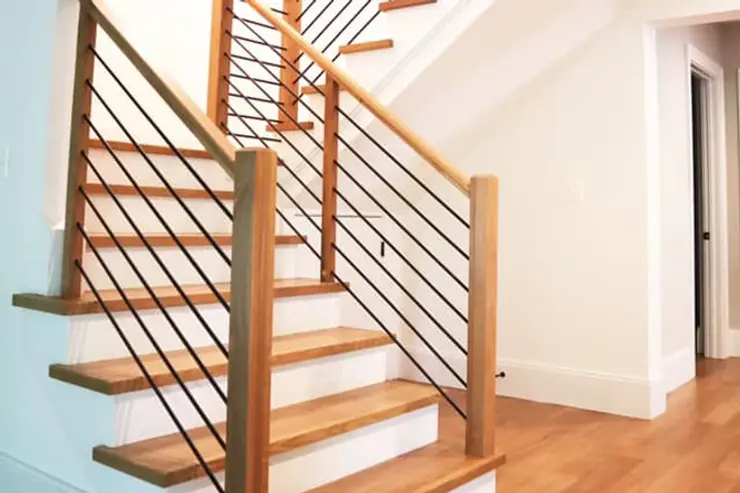
A custom staircase costs between $4,000 and $30,000 or more, depending on design, materials, and labor. Curved staircases are the most expensive due to complex engineering and woodworking. The choice of wood, metal, or other materials affects the price, along with extra landings, specialized railings, painting, and carpeting.
Contact us today about your custom staircase project.
Wood Type Impact on Custom Staircase Cost
Common wood staircase choices like white oak and hickory offer a blend of durability and aesthetic appeal, with costs for oak ranging from $60 to $130 per step and hickory falling between $120 to $220 per step.
Cost per step, including labor, varies as follows:
- Oak: $60 – $130
- Maple: $130 – $240
- Hickory: $120 – $220
- Pine: $80 – $180
- Ash: $100 – $210
- Bamboo: $140 – $360
Exotic woods such as Brazilian cherry might elevate the project’s cost due to their higher price points and unique visual appeal.
Choosing the right wood species is pivotal in determining both the cost and the character of your custom stairs.
More on the cost of oak staircases.
Custom Staircase Cost by Design Complexity
The complexity of your custom staircase design significantly influences the project’s overall cost. A basic straight staircase is the most economical choice, often starting at the lower end of the cost spectrum.
In contrast, a curved staircase or designs incorporating custom stair parts like intricate railings and balusters can substantially increase the price. For example:
- Straight Staircase: The most straightforward design, with costs starting at around $4,000 for basic materials and installation.
- Curved Staircase: A more complex and visually appealing option, curved staircases start at approximately $8,000, with prices increasing with the complexity and quality of materials.
- Floating Stair System: Modern and sophisticated, floating stairs can begin at $12,000, reaching upwards of $30,000 for high-end designs and materials.
The addition of custom stair parts, such as unique railings or balusters designed by master craftsmen, can also elevate the project’s cost, reflecting the time, skill, and materials required to achieve these detailed features.
Want to know the spiral staircase cost?
More Custom Wood Stairs Cost Information
Handrails and Balusters: The average cost for wood handrails is around $900 or $30 to $70 per linear foot. Balusters can cost between $3 to $17 each, with homeowners spending on average between $1,200 to $1,600 for the entire staircase.
2022 Material Price Surge: Notably, material prices have seen a 5% to 10% increase due to rising demand, impacting overall project costs and delivery times.
Carpet or Flooring Replacement: The cost to remove any carpet ranges from $75 to $300. Replacing it with hardwood for 10 to 12 steps costs between $1,080 to $2,700, including carpet removal.
Subfloor or Structural Improvements: Enhancing or repairing subfloors or underlying structures can add around $1,000 or $1.50 to $7 per square foot to the project cost, depending on specific needs.
Refinishing vs. Replacing: Refinishing steps costs between $40 to $75 each, with a total range of $400 to $900 for 10 to 12 steps. Comparatively, prefinished wood, while higher in upfront costs, can reduce labor expenses during installation.
DIY vs. Professional Installation: Opting for professional installation can cost about $60 per stair or $50 to $100 per hour, with labor typically comprising around 40% of the total project cost.
What Factors Can Impact Your Custom Wood Stairs Cost?
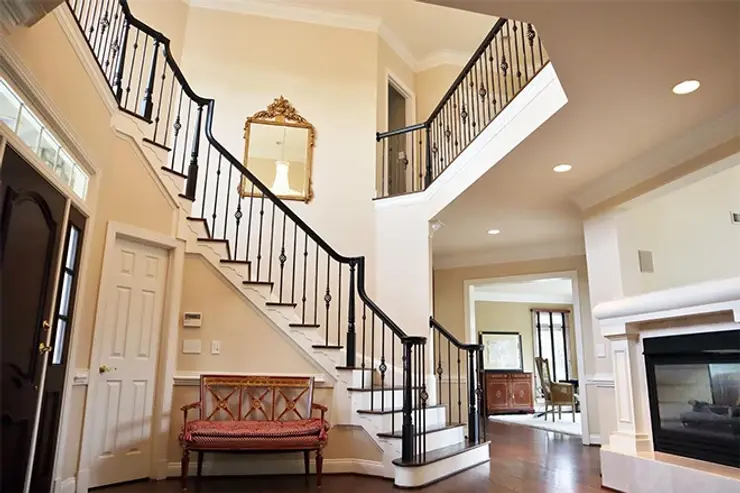
Railing and Balusters Design Choices
When customizing the railings and balusters for your custom wood stairs, particularly in the Vienna neighborhood, the design choices you make can significantly affect your project’s overall cost.
Opting for simple wooden railings might be cost-effective, but incorporating intricate designs or materials like iron can elevate the aesthetic and the price.
Custom stair parts, crafted by master craftsmen, not only add uniqueness to your stair system but also increase the cost due to the detailed work involved.
For instance, quality stair parts like handcrafted iron balusters might start at $30 each, adding considerable expense to the project depending on the number you need.
What’s the stair banister installation cost?
Staircase Installation Location and its Implications
The installation location within your home can greatly influence the design choices and, thus, the cost of your custom stairs. A grand staircase in the entryway of a Clifton home may require a more elaborate design and high-quality materials compared to a more functional staircase in less visible areas.
This visibility often demands aesthetic considerations, which can impact the choice of wood species, stair parts, and overall style of the staircase, affecting the final cost.
Pre-existing Conditions and Preparation Work
Preparing your home for a new custom wood staircase might entail additional costs, especially if replacing an existing stairway.
The condition of the existing stairwell, including the need for removal of old stair parts or carpeting, can add to the project’s complexity. Removing old carpeting might cost between $75 and $300, and if the underlying structure requires modifications or repairs, it can further increase the project’s budget.
You’ll want to check out these custom staircase remodeling ideas for inspiration!
Strategies for Managing and Reducing Custom Wood Stairs Costs
Custom Staircase Material Selection
Choosing the right wood species is crucial for balancing aesthetics with cost.
While exotic woods like Brazilian cherry offer a unique look, they come at a higher price.
Homeowners might consider more cost-effective options like pine or hickory, which offer durability and beauty without the premium price tag of more exotic woods.
Additionally, exploring options like reclaimed wood can provide a unique aesthetic while potentially reducing costs.
Timing and Project Planning
Scheduling your custom wooden stairs or new construction project during off-peak seasons can lead to more competitive prices and quicker project turnaround times. Many local contractors might offer reduced rates or promotions during slower business periods, providing an opportunity for savings.
Use our staircase remodel planning process to help with your project!
DIY vs. Professional Custom Staircase Installation
While a DIY approach might seem like a way to save on labor costs, the complexity of installing custom wood stairs often requires the expertise of master craftsmen.
The precision needed for a flawless installation means that hiring professionals might be more cost-effective in the long run, preventing costly mistakes and ensuring the durability and safety of your stairs.
Hidden and Additional Custom Staircase Costs
Unexpected Factors
Homeowners, particularly those undertaking remodeling projects in historic neighborhoods, might encounter unexpected costs due to the need for structural reinforcements or compliance with local building codes. These hidden costs can significantly affect the project’s budget, making it important to allocate a contingency fund.
Refinishing vs. Replacing Custom Stairs
Deciding between refinishing existing stairs and replacing them with a new custom wood staircase can also impact your budget. Refinishing can be a cost-effective way to refresh your stairway, with costs ranging from $400 to $900 for 10 to 12 steps. However, for stairs requiring extensive repairs or updates to match your home’s style, replacement might offer a better long-term value.
Prefinished vs. Unfinished Wood
Prefinished wood can simplify the installation process, eliminating the need for on-site sanding and finishing. Although prefinished treads might have a higher upfront cost, they can reduce overall labor costs. Unfinished wood allows for more customization but requires additional labor to finish, potentially increasing the project’s cost.
Maximizing Your Custom Staircase Investment
Long-term Value
Investing in high-quality materials and professional installation for your custom wood stairs ensures that your home benefits from both immediate aesthetic improvements and long-term value. Quality stair parts and craftsmanship can create a focal point in your home that endures through the years, enhancing your home’s marketability and appeal.
Maintenance and Upkeep of Custom Wooden Stairs
Regular staircase maintenance is key to preserving the beauty and functionality of your custom wood staircase. Simple steps like regular cleaning, avoiding harsh chemicals, and addressing any wear and tear promptly can keep your stairs looking their best. Homeowners can ensure their investment continues to add value and style to their homes for years to come.
The Custom Staircase Installation Debate: DIY vs. Professional
DIY Considerations
When considering the DIY route for your custom wood stairs, it’s essential to assess not just your skill level but also the tools at your disposal. While the potential savings on labor costs can be significant, the risks involved with a project of this complexity—ranging from minor aesthetic flaws to major structural issues—cannot be overstated.
Professional Custom Staircase Installation Benefits
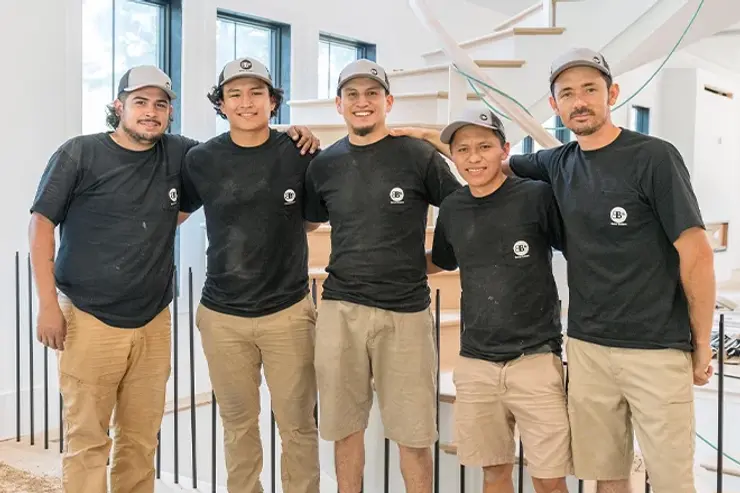
On the other hand, entrusting your custom staircase project to the professionals at Stair Creations guarantees not just expertise and efficiency but also the peace of mind that comes with a warranty on their work. With years of experience in creating stunning, durable staircases, our team ensures that every detail is perfected, from the initial design to the final installation.
Discover more about the DIY vs. professional staircase installation debate.
FAQs About Custom Staircase Costs
1. How do building codes impact the cost of a custom staircase?
Local building codes may require specific materials, railing heights, tread depths, and other safety features that can influence the cost of your staircase. Compliance with these regulations may require additional structural reinforcements or specialized designs, increasing the project’s budget.
2. Can the staircase’s location in the home affect the price?
Yes. A staircase in a highly visible entryway often requires premium materials and design, which can drive up costs. Conversely, a secondary staircase in a basement or attic may have fewer aesthetic requirements and a lower overall price.
3. How does ceiling height affect the cost of a staircase?
A taller ceiling means more steps, which increases material and labor costs. High ceilings might also require additional landings, longer railings, and more structural support, all of which add to the final price.
Put the Custom Touch on Your Home With Stair Creations
At Stair Creations, we understand the intricacies of transforming your home with a custom wood staircase that speaks volumes about your style and elegance. With our expertise, your staircase project in Virginia will ascend to new heights of beauty and craftsmanship.
To embark on the journey toward elevating your home’s aesthetic and value, fill out our contact form today or give us a call. Let’s create a masterpiece together, one step at a time.