Elevate Your Home’s Appeal
Have you ever paused to admire the rich grain of a wooden staircase? Pondered how such a centerpiece can redefine your home’s entire aesthetic?
Dive with us into the world of interior wood staircases and their costs.
By the end of this read, you’ll be equipped with the inspiration and the knowledge to make an informed decision, potentially transforming your home into a visual masterpiece.
What Does a Wooden Staircase Cost?
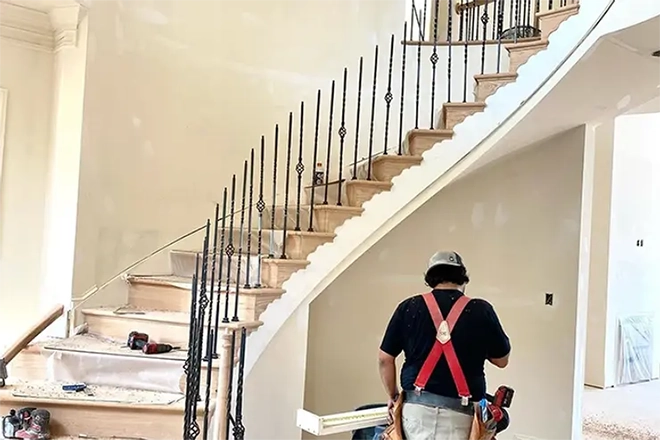
The cost to put hardwood on stairs can range from $60 to $360 per step, depending on the hardwood and any styling you choose. Including the other parts of a staircase, the wooden staircase cost can rise to between $4,000 and $30,000. Labor, finishes, and location influence the total price.
Here’s a breakdown of the costs for different hardwood types:
- Oak: A timeless favorite, oak costs between $75-$200 per step.
- Maple: Known for its smooth grain, maple ranges from $130-$240.
- Hickory: With its distinct grain pattern, hickory is priced between $120-$220.
- Pine: Offering a rustic charm, pine costs between $80-$180.
- Ash: A strong yet light-colored wood, ash ranges from $100-$210.
- Bamboo: Modern and eco-friendly, bamboo stands between $140-$360.
Wooden Staircase Treads and Risers Cost
Replacing hardwood stairway treads and risers typically costs between $1,800 and $2,500.
Individual wooden treads are priced around $35 to $50, though you can find them as affordable as $20 or as premium as $160, depending on the wood quality.
Wooden Staircase Handrails and Balusters Cost
Wood handrails (or a wooden banister) can average around $900 or $30 to $70 per linear foot.
Balusters, sometimes referred to as spindles, can cost between $3 and $17 each. On average, homeowners spend about $1,200 to $1,600 on balusters for their staircases.
Let’s figure out the details of your staircase remodel together.
Average Wood Staircase Costs: National vs. Northern Virginia
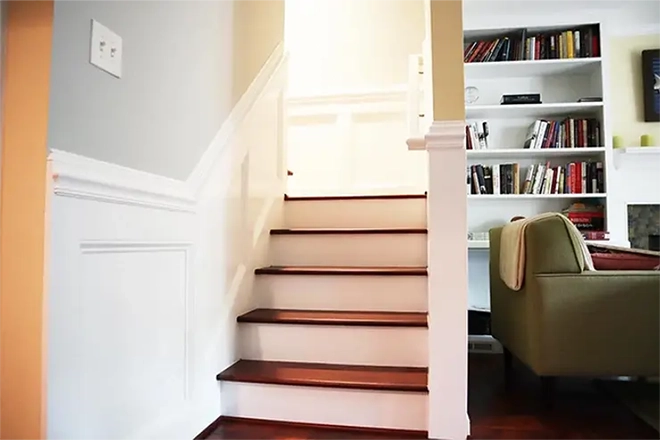
When it comes to home improvements, it’s always a good idea to have a finger on the pulse of both national and local trends. After all, a savvy homeowner knows that costs can vary wildly depending on where you live.
So, let’s dive into the nitty-gritty of how the costs for wood staircases stack up on a national scale versus NoVA.
Nationwide Wood Staircase Cost
Across the U.S., homeowners are embracing the traditional charm of a wood staircase.
On average, the national cost for these beauties hovers around $2,200. Of course, this figure can swing from a modest $1,000 to a more lavish $5,000, depending on the design intricacies and material choices.
And for those with a penchant for luxury? Well, some splurge over $100,000 for those jaw-dropping, magazine-worthy designs.
NoVA Focus
Northern Virginia, from the colonial character of Old Town Alexandria to the modern luxury builds in Vienna, often sees a slightly elevated price point.
Why?
Well, NoVA homeowners have a reputation for valuing quality and aesthetics. The demand for top-notch craftsmanship and premium materials nudges the costs a tad higher than the national average.
But remember, with that extra investment, you’re not just getting a wood staircase; you’re getting a statement piece that guests won’t stop raving about.
More about the cost of a staircase remodel.
What Affects the Cost of Wooden Stairs?
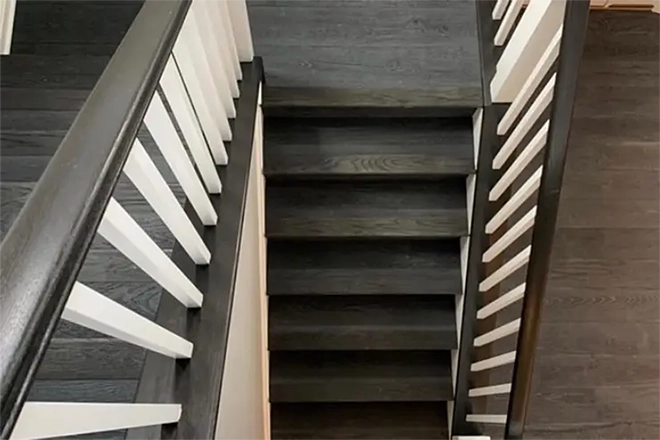
Ah, the age-old question: “Why does it cost that much?”
When it comes to a wood staircase, several factors can make your quote swing from budget-friendly to “Wait, how many zeros was that?” But fear not! We’re here to demystify the elements that play a role in determining the cost.
Staircase Style
The style of your staircase is a reflection of your home’s personality and your personal design preferences.
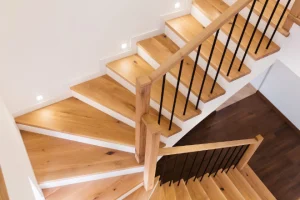
A straight staircase, often seen as the standard, offers a clean and straightforward path between floors. Its simplicity in design often translates to fewer materials and labor, making it a more budget-friendly option.
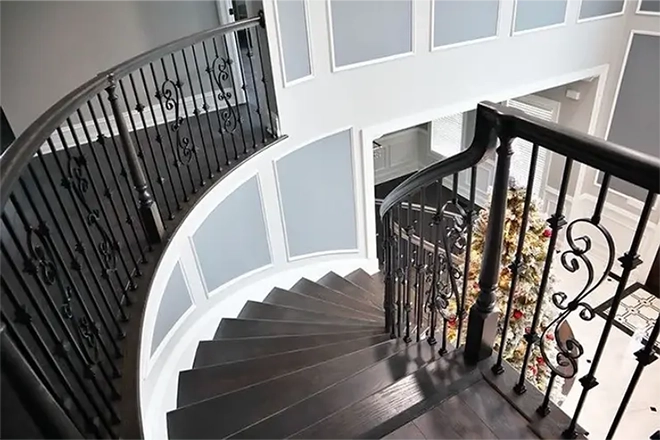
However, if you’re looking to make a statement in a modern space, spiral staircases or a winding staircase, with their elegant curves and space-saving design, might be your pick. While they exude luxury and can be a visual masterpiece, their intricate design requires precision in craftsmanship.
This complexity, combined with the need for specialized materials to achieve those perfect curves, can push up the price of a wood staircase.
Scissorback staircases are the most popular staircase style among homeowners in NoVA.
Wood Choice
Every type of wood tells a story.
Oak, for instance, speaks of tradition and durability. Its grain pattern and hues have graced homes for centuries, making it a timeless choice.
On the other hand, bamboo offers a narrative of sustainability and modernity. Its rapid growth rate and unique appearance make it an eco-friendly choice for contemporary homes.
But beyond aesthetics, the density, grain pattern, and availability of the wood type can influence its price. Hardwoods, known for their durability, might come with a higher price tag for a wood staircase than softer woods.
However, they often offer better resistance to wear and tear, potentially saving homeowners on long-term maintenance costs.
Prefinished Wood vs. Unfinished Wood
Choosing between prefinished and unfinished wood is like deciding between a ready-to-wear suit and a tailored one.
Prefinished wood comes sanded, stained, and sealed from the factory, making the wood staircase installation quicker and often less messy. However, this convenience can come with a higher price tag.
Unfinished wood, while potentially more affordable upfront, requires on-site finishing. This process allows for greater customization but can add labor costs due to sanding, staining, and sealing.
Red oak and white oak are the trendiest staircase materials among NoVA homeowners.
Stair Railing Type
Railings serve a dual purpose: ensuring safety and enhancing aesthetics.
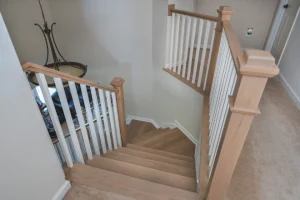
A basic wooden railing, with its natural charm, can be a cost-effective solution for those looking to maintain a cohesive theme throughout the wood staircase.
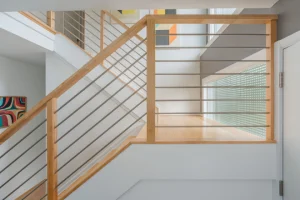
However, for homeowners looking to infuse a touch of luxury or a modern twist, metal railings, especially those with intricate designs or combined with glass, can be the go-to choice. While these materials and designs can elevate the visual appeal, they often come with a higher cost due to the specialized installation techniques and premium materials required.
Staircase Location
The location of your staircase plays a pivotal role in the materials and design you might opt for.
A primary staircase, often the first thing guests see upon entering, becomes a focal point of your home. This prominence often demands high-quality materials, intricate designs, and expert craftsmanship, all of which can elevate the cost.
On the flip side, a wood staircase tucked away in basements or attics might not require such opulence. These “hidden gems” can be simpler in design, using more budget-friendly materials, thus being more economical.
Carpet Removal and Installation
Transitioning from a carpeted staircase to hardwood involves more than just laying down new steps.
Carpet removal can be a meticulous process, especially if the carpet is glued down or has been in place for years. This removal process can add labor hours and, thus, additional costs.
Post wood stairs installation, if you’re considering a carpet runner for aesthetics or added safety, there’s the cost of the stair carpet material and its installation.
Subfloor Condition
Behind every sturdy wooden staircase is a robust subfloor. The subfloor provides wooden stairs with the necessary support, ensuring your steps remain squeak-free and stable for years.
If the existing subfloor is damaged, uneven, or not suited for hardwood, repairs or replacements become essential. This process can involve leveling, reinforcing, or even replacing sections of the subfloor, each adding to the project’s cost.
Finishing Touches
A hardwood staircase’s beauty is often in its finish.
Staining can bring out the wood’s natural grain, while sealing protects it from wear and tear. The type of stain, whether oil-based or water-based, can vary in cost.
Similarly, the choice of sealant, be it polyurethane or a natural oil finish, can influence durability and price.
Additionally, the number of coats and the need for sanding between them can add labor hours, impacting the final cost.
Wooden Staircase Labor Costs
Northern Virginia is renowned for its discerning homeowners who value quality, especially when it comes to wooden stairs.
This demand for excellence means contractors in the area often bring a wealth of experience and expertise. While this ensures a top-notch installation, it can also mean higher labor rates.
The reputation, experience, and even the season can influence a contractor’s availability and pricing.
Repair or Replace Your Wooden Stairs?
When faced with an aging or damaged wood staircase, homeowners often grapple with the decision to repair or replace it.
Repairs, like fixing a few steps or railings, can be cost-effective in the short term. However, if underlying issues persist or the staircase’s overall integrity is compromised, a full replacement might be more economical in the long run.
A fresh wood staircase installation ensures safety, modern wood staircase design standards, and can even offer energy-saving benefits.
Impact of Wood Price Surges
2022 was a whirlwind for the home improvement sector, especially in areas like NoVA. With a surge in demand for building materials, prices inevitably climbed, affecting homeowners’ budgets. Lumber costs have risen for many reasons.
A sudden spike in demand for building materials led to a 5% to 10% price increase within a year. Extended delivery times compounded the issue, making projects pricier and lengthier.
For NoVA residents, this surge felt more pronounced. Projects, including wood staircase installations, came with heftier price tags.
But all’s not lost! Here are some strategies for homeowners:
- Bulk Purchasing: Got multiple projects? Buy materials in bulk for potential discounts.
- Local Suppliers: Check out local suppliers who might offer better deals or alternative materials.
- Flexible Timelines: If possible, adjust your project’s timeline to wait for off-peak seasons or promotions.
DIY vs. Professional Wood Staircase Installation
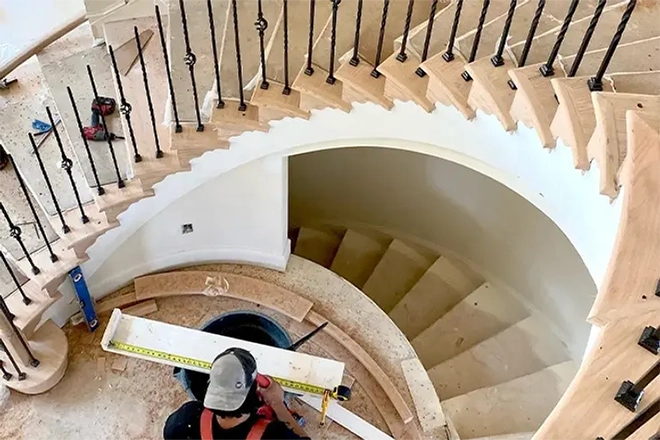
Embarking on a home improvement journey, especially something as intricate as a hardwood staircase, often comes with a big question: “Should I tackle this myself or call in the pros?”
Both paths have their merits, but which one’s right for you? Let’s break it down.
DIY Wood Staircase Installation
Pros:
- Cost Savings: Going DIY can save you some bucks, especially on labor costs.
- Personal Touch: There’s a unique satisfaction in building or renovating something with your own two hands.
Cons:
- Time-Consuming: Without professional tools and expertise, the project might take longer.
- Potential Mistakes: A misstep can lead to added costs and redoing work.
Professional Wood Staircase Installation
Pros:
- Expertise: Professionals bring years of experience, ensuring the wood staircase installation is done right the first time.
- Efficiency: With specialized tools and a team, pros can often complete the project faster.
- Warranty: Many professional installations come with a warranty, giving you peace of mind.
Cons:
- Higher Initial Cost: Professional services come with a price, which might be higher upfront.
Making the Decision
When deciding between DIY and professional wood staircase installation, consider the following:
- Skill Level: Do you have the necessary skills, or are you willing to learn?
- Budget: Can you afford a professional, or are you looking to save where you can?
- Time: Do you have the time to dedicate to a DIY project, or would you prefer a quick, professional turnaround?
More on DIY vs. professional stair remodeling.
What’s the ROI of a New Wooden Staircase?
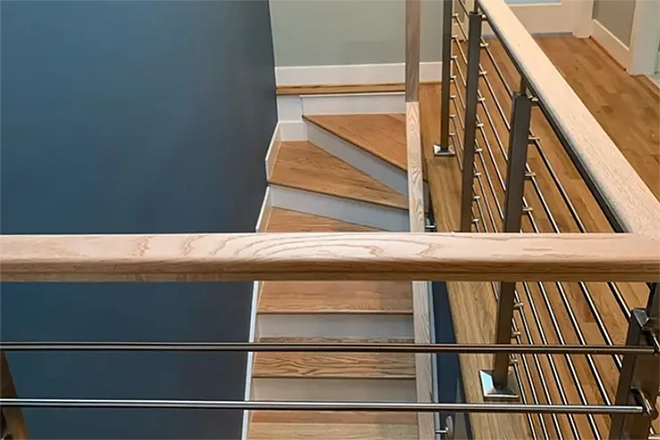
Hardwood staircases often offer a significant return on investment (ROI) of 70-80%. Homes with such staircases tend to fetch higher market prices, thanks to the perceived value of quality woodwork.
Moreover, the timeless appeal of wood ensures that your staircase remains in vogue, regardless of changing interior design and decor trends.
How To Lower Wood Staircase Costs
While wood stairs are undeniably attractive, they can also be pricey. But fear not! There are ways to achieve that dream staircase without emptying your savings.
Opting for alternative wood types, for instance, can be a game-changer. Instead of the classic oak or maple, why not explore other durable yet more affordable woods?
Another avenue to consider is reclaimed wood. Not only is it a nod to sustainability, but it also often comes at a lower price point. Plus, the unique character and history it brings can be a conversation starter.
And, of course, never underestimate the power of shopping around. Different suppliers offer varied rates, so taking the time to get multiple quotes can lead to significant savings.
Why Choose Wood Stairs?
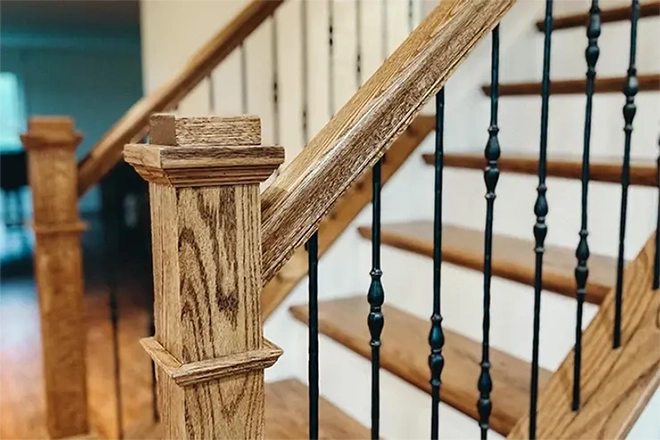
If you’re contemplating whether hardwood stairs are the right choice, let’s dive into their myriad benefits.
First and foremost, hardwood is synonymous with durability. It’s built to withstand daily wear and tear, promising longevity.
They are the low-maintenance option; a quick sweep and the occasional polish are all it takes to keep them in top-notch condition.
But beyond the practicalities, wood stairs are a design marvel. Their rich grains and warm tones infuse spaces with a touch of nature, creating an ambiance that’s both cozy and upscale.
In essence, hardwood stairs are where functionality meets timeless elegance.
Components Of A Wooden Staircase
When we talk about a wooden staircase, it’s not just the steps that come into play. Each component of wood stairs, from the treads to the risers to the newel post, plays a crucial role in the staircase’s functionality and aesthetics.
- Treads: These are the horizontal parts you step on. They bear the brunt of the foot traffic and are designed for durability.
- Risers: The vertical pieces between each step, risers give height to your wood stairs and can be a canvas for design elements.
- Nosing: This is the protruding edge of the tread, adding a finishing touch and reducing wear on the most exposed part of the step.
Safety Considerations For Wooden Stairs
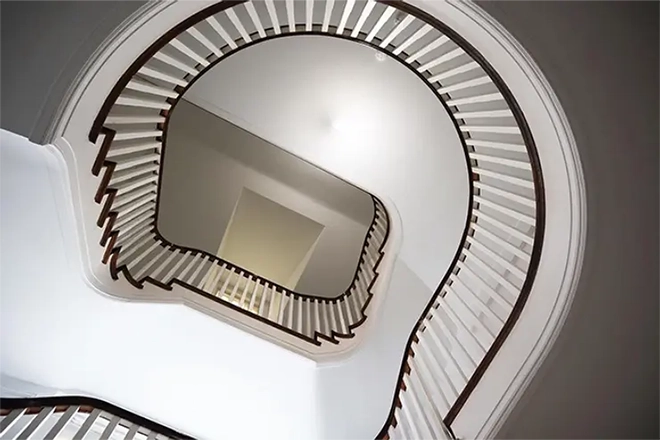
When it comes to a wood staircase, its beauty is evident. However, there’s a practical side to consider.
The polished, smooth surface of hardwood can sometimes become a slip hazard, especially if you’re wandering around in socks or wearing shoes with certain soles.
But there’s no need for alarm. There are effective solutions to this.
One popular option is carpeted runners. They not only enhance the wooden staircase’s design but also provide much-needed traction, significantly reducing slip risks.
Another solution is non-slip tread covers. These transparent covers ensure a firm grip without concealing the natural beauty of the wood stairs.
From Oak to Ash, Stair Creations Can Craft It All
In wrapping up, a wood staircase is more than just a functional element in your home. It’s a statement piece, a reflection of your style, and an investment in your property’s value.
At Stair Creations, we understand the nuances of wood staircase design and installation. Whether you’re looking for a grand spiral staircase or a simple straight design, we’ve got you covered.
Ready to take the next step? Fill out our contact form today, or give us a call. Let’s bring your wood staircase vision to life!