Stairs In Despair? Spot The Signs Before You Climb!
Is your staircase trying to tell you something? Could those creaks, cracks, and worn-out spots be red flags you’re ignoring?
In this post, we’ll walk you through the top 10 signs your staircase needs a remodel.
From safety concerns to aesthetic upgrades, you’ll discover the key indicators that it’s time for a staircase remodeling project.
Major Signs Your Staircase Needs A Remodel
If you notice any of the following, your staircase likely needs a remodel:
- Worn-out treads and risers
- Creaky or loose steps
- Cracked or damaged staircase structure
- Broken or wobbly handrails
- Water damage in wooden stairs
- Rot or decay
- Damaged understructure
- Faded or discolored finishes
- Outdated or mismatched design
- Damage from termites and pests
1. Worn-Out Treads And Risers
One of the most common signs a staircase needs a remodel is worn-out treads and risers.
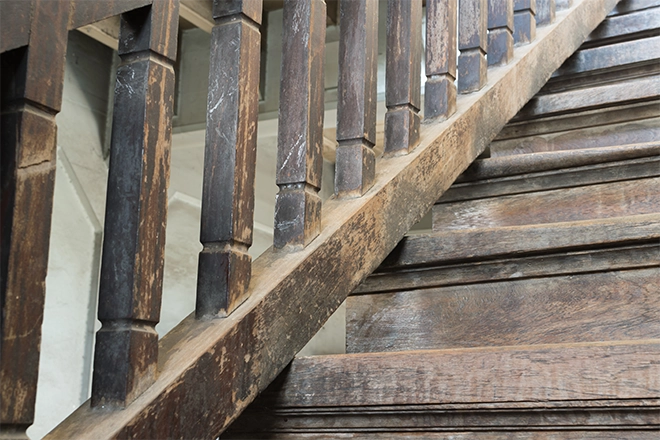
Over time, the surfaces of stairs can become chipped, faded, or cracked due to heavy foot traffic. When treads and risers are compromised, they reduce traction. This increases the likelihood of a slip or fall.
In older homes, this wear can appear even more pronounced. If you’ve noticed gaps or uneven surfaces, it’s time to consider an immediate repair to restore both safety and appearance.
Restoring or replacing these worn-out elements ensures the staircase is safer and breathes new life into its design.
How to install new stair treads.
2. Creaky Or Loose Steps
Hearing a creaking sound when you walk up your stairs is more than just an annoyance—it’s a clear signal that your staircase may have structural integrity issues.
A creaky staircase often results from loose steps or weakened connections beneath the surface.
While loud creaks might seem harmless at first, they can indicate deeper structural problems that need to be addressed before they become dangerous. High-traffic areas in your home are especially susceptible to this problem.
3. Cracked Or Damaged Staircase Structure
Visible cracks in the structure of your staircase—especially along the treads or risers—are serious red flags.
These cracks compromise the overall strength of the staircase. If left untreated, it can worsen over time, eventually requiring more extensive repair. Cracks may also indicate underlying issues with the home’s foundation or stair frame.
If you see cracks forming, it’s crucial to have them inspected by a professional. They can determine whether a remodel is needed to address any foundational or structural concerns.
4. Broken Or Wobbly Handrails
A loose handrail or baluster is a nuisance and can lead to accidents.
Handrails play an important function in ensuring safety, especially for children or elderly family members. When a handrail becomes loose or wobbly, it’s a sign that the support system has weakened. Due to this, the risk of falling increases.
Fixing loose handrails or loose railings as part of a remodel can make your staircase safe again while also giving it a fresh new look.
How to install new stair railings.
5. Water Damage In Wooden Stairs
Water damage is a frequent issue for staircases, especially wooden ones.
Whether caused by leaks, flooding, or humidity, water can warp treads and risers. This leads to uneven surfaces and a weakening of the overall structure.
In places like Virginia, where weather conditions can fluctuate, homes may be more prone to these issues. Water damage can eventually cause stairs to soften and become unstable. This requires immediate attention.
If you spot signs of warping, discoloration, or soft spots, it’s best to opt for a remodel before the problem worsens.
6. Rot Or Decay
Wooden stairs are particularly susceptible to rot or decay, especially if exposed to moisture over time.
You might notice soft spots where the wood has started to break down. This rot can spread and make the stairs hazardous to use.
Replacing decayed portions during a remodel ensures the structural integrity of your staircase and extends its lifespan.
Want to know how to identify wood rot?
7. Damaged Understructure
Even if the surface of your stairs looks fine, the understructure may be compromised.
Issues with the support system beneath the stairs can cause them to feel unstable or even collapse. This kind of damage is often hard to spot without a professional inspection. If your stairs are older or have been through significant wear and tear, it’s worth investigating.
8. Faded Or Discolored Finishes
Over time, exposure to sunlight and cleaning agents can cause the finish on your stairs to fade or become discolored.
While this doesn’t directly impact safety, it can make your staircase look old and worn. Refinishing or repainting the stairs during a remodel can dramatically improve the appearance of your home’s interior.
Updating the finish can also add a layer of protection, extending the life of the stairs.
9. Outdated Or Mismatched Design
An outdated staircase can clash with your home’s modern design or decor.
If your staircase feels out of sync with the rest of your house, a remodel can refresh its look, adding value and style to your space. Even small changes like updating balusters or changing the finish can make a big difference.
Make sure your new stairs follow any new building codes.
10. Damage From Termites And Pests
Termites and other pests can wreak havoc on wooden stairs.
Signs of termite damage may include powder deposits, softened wood, or visible chewing marks.
If pests have compromised your staircase, replacing the damaged wood is often the best option to prevent further damage.
Curious about the staircase remodel planning process?
Heed The Signs And Contact Stair Creations
At Stair Creations, we specialize in identifying and fixing all the signs a staircase needs a remodel. Whether it’s worn treads, loose railings, or water damage, our experienced team ensures your staircase is both safe and stunning.
Ready to transform your staircase? Fill out our contact form today, or give us a call to discuss your remodeling needs!