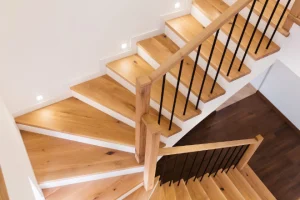

From Worn to Wow
Ever look at your stairs and wonder how they went from charming wood to scratched-up eyesore? Curious if you can bring them back to life without replacing the whole staircase?
In this post, you’ll learn how to refinish hardwood stairs step-by-step, from stripping and sanding to staining and sealing.
By the end, you’ll know how to transform tired, worn-out treads into smooth, finished wood steps that feel like new and cost way less than a full remodel.
Or you know you’ll want someone else to handle your stair staining and sealing project.
Key Points
- Refinishing hardwood stairs is a multi-step process that involves stripping the old finish, sanding thoroughly, applying stain, and sealing for durability.
- Some DIYers can refinish stairs over a weekend with basic tools like an orbital sander, a brush, and patience.
- The results are worthwhile, giving you a refreshed look, smoother walking surface, and a boost in your home’s overall style.
How to Refinish Hardwood Stairs (Quick Answer)
Refinishing hardwood stairs involves stripping the old finish, sanding the wood, applying stain, and sealing with a protective coat. It’s a multi-step process that can take several days depending on the size and condition of your staircase.
Here’s a simplified overview of how to refinish hardwood stairs:
- Strip old paint or finish.
- Sand down to bare wood.
- Apply stain (optional).
- Apply sealer or polyurethane.
- Let dry and re-coat if needed.
- Paint risers and caulk edges for a finished look.
Contact us today about staining and sealing your stairs.
Prep Work Before You Refinish Hardwood Stairs
Remove Carpet, Staples, and Nails
If you’re dealing with old carpeted stairs, the first step is to get that carpet out of the way.
Use pliers or a pry bar to pull up staples, tack strips, and leftover nails that might be embedded in the stair treads.
Once the surface is cleared, you’ll be able to see what kind of wear and tear you’re working with.
Repair Damaged Wood and Treads
Before you dive into sanding, inspect each tread and riser for damage.
Use wood filler to patch holes or gouges, and sand it down smooth once it’s dry.
If any stair treads are cracked, loose, or warped, now’s the time to fix or replace them so the refinishing process goes smoothly later on.
Clean the Staircase
Grab a vacuum to remove dust, dirt, and debris from every tread and riser.
Follow up with a tack cloth or a damp rag to get the fine particles.
A clean wood surface helps stain and polyurethane stick evenly and look great.
Stripping the Old Finish or Paint
Choose a Stripping Method
If your stairs are coated with thick layers of paint or an old polyurethane finish, you’ll want to start with a chemical stripper or gel-based stripping agent.
Apply it using a disposable brush and give it time to soften the old finish according to the label instructions.
How to Scrape Safely
Use a plastic putty knife to scrape off the softened finish without gouging the wood.
Always scrape in the direction of the wood grain.
It’s a good idea to wear work gloves and a dust mask for safety.
Sanding the Stair Treads and Risers
Sand in Stages
Start with coarse grit sandpaper, like 60 or 80 grit, to get rid of the old finish.
Follow that with 120 grit, and finish with 180 or 220 grit to create a smooth surface that’s ready for stain.
Always sand in the direction of the wood grain to avoid scratches.
Best Tools for the Job
An orbital sander works well on the flat part of the stair treads.
A sanding block is better for tight edges and corners.
Stay away from a belt sander; it removes too much material too quickly and can damage hardwood stairs.
Keep a vacuum handy to remove dust between sanding passes and wear a dust mask for safety.
Don’t Skip Corners
Corners, edges, and areas around balusters will need hand sanding.
Take your time here.
These small spots can stand out once you apply stain or a polyurethane finish, so make sure they’re as smooth as the rest of the tread.
Staining the Stair Treads
Choose a stain color that ties into your hardwood floors, whether you want a subtle match or a bold contrast like red oak or a darker color.
Condition the Wood Before Staining
To help your stain go on evenly, use a wood conditioner.
It preps the wood grain and prevents blotchy or uneven color, especially important for softer woods or wood stairs with signs of previous wear.
Applying the Stain
Use a foam roller or brush to apply the stain across the stair treads, one at a time.
Wipe off excess with a clean rag and allow the first coat to dry fully before deciding whether a second coat is needed.
Sealing the Wood with Polyurethane
Choose Your Finish
Water-based polyurethane is a solid choice if you want faster drying time and lower odor.
Oil-based options take longer to cure but give your stair treads a warm, rich look with long-lasting protection.
Water-based polyurethane vs. oil-based.
Apply in Thin Coats
Use a high-quality foam roller or brush to lay down your first coat.
Wait until it’s fully dry before adding another, and keep the coats thin to avoid bubbles or drips.
You’ll probably want two coats minimum, maybe more for stairs in high-traffic areas.
Dry Time and Protection
Allow 24 hours of drying time after the final coat before using the stairs regularly.
During this time, keep shoes, pets, and foot traffic off the treads to protect the new finish.
Painting the Risers and Adding Detail
Prepping for Paint
If your risers have dents or rough spots, fill them with wood filler or spackle and sand smooth. Then wipe everything down with a tack cloth to make sure the paint goes on clean and even.
Paint and Caulk for a Clean Finish
Use a white oil-based paint or durable trim paint to give your risers a crisp, classic look.
Add a bead of caulk where the riser meets the tread to cover gaps and create a seamless transition.
How Long Does It Take and What Does It Cost?
Typical Timeline
Refinishing stairs usually takes 3 to 5 days, depending on how many treads you have and how long each coat of stain and polyurethane needs to dry.
If you still need to use the stairs during the project, work on every other step to keep a path open.
Average Cost
DIY materials for refinishing stair treads typically cost between $100 and $250.
If you hire a pro to refinish hardwood stairs, expect a price between $800 and $1,500, depending on the size of the staircase and the condition of the wood.
Tips for hiring a stair contractor.
Tips for a Smoother Finish
- Work in sections so the staircase can still be used. Refinish every other step and allow those to dry before switching to the rest.
- Clearly mark wet treads with tape or signs to prevent accidental use during the drying process.
- Be patient with drying time between coats of stain and polyurethane. Applying the next coat too soon can lead to a cloudy finish or streaks.
- Use painter’s tape on walls and trim to avoid stain or finish splashes and save yourself cleanup time later.
- Test stain and finish products on scrap wood or a hidden corner of a stair tread before doing the full staircase.
- Keep a window open and use a fan if you’re working indoors to reduce fumes and speed up drying time, especially with oil-based products.
- Vacuum between sanding stages and wipe down each step with a tack cloth before staining or sealing to keep dust out of your finish.
- Don’t overload your brush or roller when applying stain or polyurethane. Thin, even coats are easier to control and give better results.
- Use proper safety gear like a dust mask during sanding and gloves when handling chemical strippers or stain.
How to maintain your stairs so they look better for longer.
FAQs About Finishing Stairs
Can I restain stairs without sanding?
You can restain stairs without sanding by using gel stain or a bonding primer designed to adhere to finished surfaces. For better results, clean the stairs thoroughly and lightly scuff the surface with a sanding pad to promote adhesion and ensure a longer-lasting finish.
Is it cheaper to sand and refinish hardwood floors or replace them?
Refinishing hardwood floors is cheaper than replacing them. Refinishing costs $5 to $10 per square foot, while replacement costs $12 to $20 or more per square foot, including materials and labor. Unless floors are severely damaged, refinishing is the more cost-effective and sustainable option.
What is the best finish for hardwood stairs?
The best finish for hardwood stairs is polyurethane, either water- or oil-based. Satin or semi-gloss sheens offer a balance of traction and durability. Water-based polyurethane dries faster and has low odor, while oil-based finishes are more durable but may yellow over time.
Finish Strong with Stair Creations
When your wood stairs need more than just a touch-up, Stair Creations is here to handle the full refinishing process from start to finish. Whether you’re restoring stair treads in an older home or want a fresh coat that can stand up to heavy foot traffic, our team brings the tools, skill, and care your staircase deserves.
If you’re ready to refinish hardwood stairs and want a professional result without the hassle, fill out our contact form today or give us a call. Let’s take your worn-out steps and turn them into a staircase worth showing off.