Pillars of the Staircase
Ever wondered what that chunky post at the bottom of your staircase is called, or what it actually does? Or maybe you’ve seen different staircase styles and thought, “Wait, are those posts just for decoration?”
In this post, you’ll learn what a newel post is, what it does, and how it fits into the overall design of a staircase.
By the end, you’ll understand how these posts provide support, style, and structure for your staircase project.
Key Points
- Newel posts are the main support pillars that hold up stair railings and keep everything steady and secure.
- There are several types of newel posts, including box, turned, and iron styles, each with its own look and purpose.
What Is a Newel Post?
A newel post is the main upright post that supports the handrail and anchors a staircase at key points. It helps stabilize the railing, marks the beginning or end of a stair run, and often adds a visual focal point to the design.
You’ll typically find a newel post:
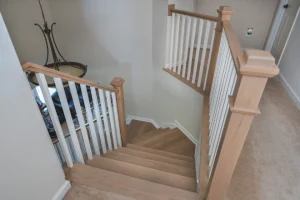
- At the bottom of a staircase
- At the top of a staircase
- At any landing or turn where the stair direction changes
This part of a staircase is different from balusters, which are the thinner vertical pieces that run along the stairs. Without newel posts, the railing system wouldn’t have proper structural support or meet local building codes.
Contact us today about your staircase project.
What Does a Newel Post Do?
Structural Purpose
Newel posts provide essential support to the stair railing system.
They’re designed to keep the handrail steady and fixed in place, which keeps the whole staircase safer to use.
They also help distribute the weight and pressure applied to the railing over time. A properly installed post prevents the railing from pulling away from the stairs or wall.
Where It’s Installed
Most staircases include at least two newel posts, one at the bottom and one at the top.
Additional posts may be positioned at landings, corners, or turns depending on the staircase layout.
Posts must be installed where the railing changes direction or elevation, like in spiral staircases or multi-level designs.
Types of Newel Posts
Box Newels
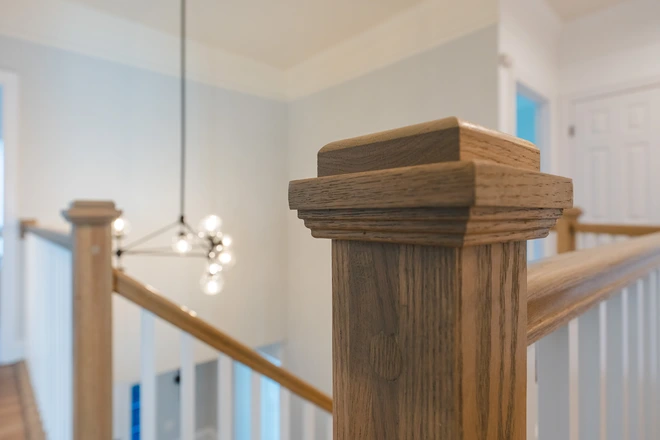
A box newel post is a square, hollow post commonly made from wood.
It has a large profile and is often topped with a cap to add a clean finish.
Box newels are popular in Craftsman, modern, and traditional staircase designs. Their flat surfaces make them ideal for adding decorative trim or matching the surrounding stair parts.
Turned Newels
A turned newel post is carved on a lathe to create a rounded, often ornate look.
These are frequently found in historic homes or classic-style stairways.
Common turned newel styles include fluted designs, rope twists, and vase shapes. Turned newels can be stained or painted and often feature more decorative details than box newels.
Iron and Metal Newels
Some staircases use iron or metal newel posts for a more modern look.
These posts are slimmer and typically paired with metal balusters or glass panels.
Iron newels are often used in open staircases or homes that lean toward industrial or minimalist aesthetics.
Newel Post Design and Style Options
Style Variations
Newel posts come in a large variety of designs.
You can find options with recessed panels, rounded corners, raised profiles, or clean flat faces.
Design details like decorative trim, cap styles, and finish choices allow you to match the newel post to the overall style of your staircase.
Cap Types
Common cap designs include flat caps, beveled caps, and pyramid caps.
Caps are often used to tie the look of the post into the surrounding handrail or floor trim.
Cap styles are especially important with box newels, where the post top is a visual feature.
Customization
If you want something unique, many manufacturers offer custom newel posts.
These might include mixed wood finishes, carved patterns, or design elements that match your cabinets or wall trim.
Custom posts are a good fit for homeowners who want their staircase to feel like a centerpiece rather than an afterthought.
Materials and Construction
Solid vs Hollow
Solid wood posts are often turned into newels made from a single block of wood. They are heavier and usually placed at the foot of the stairs where extra support matters most.
Box newels are hollow and built from multiple joined pieces. This allows for easier handling, creative internal bracing, and hidden mounting systems.
Wood Species and Finishes
Common wood types include oak, maple, poplar, and pine.
- Oak is known for strength.
- Maple is known for its smooth finish.
- Poplar is known for its ability to take paint well.
Most wood newel posts are either stain-grade or paint-grade, depending on the desired look and use.
Installing Newel Posts
Mounting Methods
Installing newel posts means securing them into the floor or stringers with fasteners, brackets, or bolts.
This step is crucial for keeping the railing secure under pressure.
Box newels are often installed with a combination of screws and hidden fasteners.
Turned newels are usually through-bolted into the floor framing or attached with specialized hardware.
Code and Safety Considerations
Most local building codes require newels to withstand a certain amount of side force. This ensures the handrail stays safe when people lean on it or grab it for support.
Always check local building codes before installing newel posts or adjusting a stair layout.
FAQs About Newel Posts
Why is it called a newel post?
The term “newel post” comes from the Old French word nuel, meaning “pillar” or “support.” It originates from the Latin word nodus, meaning “knot” or “knob,” referencing the post’s rounded or decorative cap. Today, it refers to the structural post that supports and anchors stair railings.
Are Newel Posts Required?
Yes. Newel posts are required at key points in most stair systems to provide support and meet code.
What are spindles, and are they required?
Can Newel Posts Be Replaced?
They can. Replacing a post may involve removing part of the handrail, so it’s often best left to a pro unless you’re experienced with stair parts.
How Tall Are Newel Posts?
Most newel posts range from 38 to 48 inches tall. The height depends on your stair rise, railing height, and how the handrail transitions at the top or bottom of the stairs.
What’s a Square Newel Base?
This is the bottom portion of a box newel. It gives the post a clean, grounded look and helps tie it into the baseboard or flooring design.
Nail the Newel with Stair Creations
Whether you’re building a new staircase or upgrading an existing one, Stair Creations can help you choose and install the perfect newel posts to fit your design and layout. From box newels to turned newels and custom builds, we bring expert craftsmanship and structural know-how to every project in northern Virginia.
If you’re ready to transform your staircase into a stylish and safe focal point, fill out our contact form today or give us a call. We’re here to help you step up your space with confidence.