Why Parquet Flooring Is Back in Style
Ever wonder what makes those zigzagging hardwood patterns in older homes so timeless? Or why parquet flooring is suddenly showing up in luxury staircases and modern remodels?
In this post, you’ll learn what parquet flooring is, what types are available, how much it costs, and how to choose the right style and material for your home.
By the end, you’ll know if parquet flooring is a style you want to use for your flooring venture.
What Is Parquet Flooring?
Parquet flooring is a hardwood surface made by arranging small wood pieces into geometric patterns like herringbone or chevron. It comes in solid, engineered, or laminate formats, usually in 9×9 to 19×19 inch tiles. Parquet blends decorative design with durability and originated in French palace architecture.
This type of flooring blends traditional charm with modern craftsmanship.
The most common tile sizes are 9×9, 12×12, and 19×19 inches, with a thickness ranging from 5/16 inch to 3/4 inch.
Pre-made parquet tiles are typically cut from red oak, maple, walnut, or other hardwood species and can be either prefinished at the factory or finished on site after installation.
Because of its flexibility in design and ability to add visual texture, parquet has become a popular choice in renovated Colonial-style homes near Old Town Alexandria and throughout Northern Virginia.
Is linoleum flooring also making a comeback?
What Are the Pros and Cons of Parquet Flooring?
Pros
- Adds a high-end, decorative look.
- It can last 20 to 40 years or more.
- Comes in many wood types and patterns.
- Boosts home resale value.
- Eco-friendly options available.
Cons
- It can look too busy in small spaces.
- Not ideal for moisture-prone areas.
- Harder to repair than plank flooring.
- Tricky to sand and refinish.
- Custom designs can be expensive.
How Long Does Parquet Flooring Last?
When properly installed and maintained, parquet flooring can last 20–40+ years.
Solid wood styles like red oak or hickory are especially long-lasting and can be refinished multiple times to extend their life. Engineered parquet wood floors can offer decades of use if protected from moisture and heavy wear.
The key to durability is location and care.
Avoid installing parquet tiles in areas with high humidity or frequent spills.
In places like stair landings or home offices, they hold up beautifully with routine cleaning and occasional touch-ups.
Using rugs, felt pads on furniture, and maintaining balanced indoor humidity will help protect the surface and reduce the need for early refinishing.
How Much Does Parquet Flooring Cost?
Custom parquet flooring costs $20–$45 per sq. ft. when fully installed and finished.
These prices reflect labor-intensive layouts like Versailles or basketweave, especially when using high-end wood species or site-applied finishes.
Prefabricated parquet tiles are much more affordable and easier to install, often costing half as much. These are great options for DIYers or homeowners who want a stylish look at a lower price point.
Wood type matters too.
Domestic options like red oak and maple tend to be cheaper than exotic woods, while engineered products reduce material waste and keep costs down.
Stair transitions, inlays, and detailed borders can raise the price, so it’s important to plan around the full scope of the project.
What Types of Parquet Flooring Are Available?
Solid Parquet
Made from 100% hardwood blocks, this type offers the most durability. It can be sanded and refinished multiple times, making it ideal for high-traffic areas that see foot traffic from weekend get-togethers during Vienna’s Oktoberfest. It’s also the most expensive and takes the longest to install.
Engineered Parquet
Built from layers of wood with a hardwood top, this option handles humidity changes better than solid parquet. It’s a great choice for basements or areas with more temperature swings.
Laminate Parquet
This budget-friendly option uses a printed wood image on a composite base. It’s sold in ready-to-install tiles and is best for light-use areas. While it can’t be refinished, it’s easy to replace and clean.
What Woods Are Used for Parquet Flooring?
Parquet wood floors are available in a wide range of species, each with its own look and durability.
- Red oak: Traditional, sturdy, and easy to refinish.
- Walnut: Rich color, best in low-traffic areas.
- Maple: Bright, modern, and very durable.
- Cherry: Warm tone that darkens with age.
- Pine: Soft and rustic, best for light-use rooms.
- Teak: Naturally moisture-resistant.
- Bamboo: Eco-friendly and strong.
- Hickory: Extremely hard and varied in grain.
Oak parquet remains the most common, but mixing species can create stunning custom parquet designs tailored to any space.
Is Parquet Flooring Good for Every Room?
Parquet works well in most dry, stable environments.
It’s perfect for living rooms, bedrooms, hallways, and stair landings, where it adds warmth and texture.
Avoid installing parquet wood flooring in bathrooms, basements, or laundry rooms unless you’re using engineered wood or moisture-resistant species like teak. These areas are prone to warping and damage from humidity, which can cause glued tiles to lift or swell over time.
How Is Parquet Flooring Installed?
Installation Steps
- Prepare the subfloor: The surface must be clean, flat, and completely dry to ensure proper adhesion.
- Add underlayment: This layer helps with sound absorption, moisture protection, and comfort underfoot.
- Plan the layout: The pattern is dry-fitted to center the design and prevent uneven tile cuts.
- Glue the tiles in place: Parquet tiles are carefully glued down to keep the pattern aligned and secure.
- Roll and cure the floor: The floor is rolled to press tiles into place and left to cure for 24–48 hours.
- Sand and finish (if unfinished): Unfinished tiles are sanded, stained, and sealed to match the desired finish and tone.
Parquet flooring can be installed by experienced DIYers, but it’s often best handled by professionals—especially when working with custom parquet patterns or stair transitions.
The details matter here.
Small misalignments in one corner of the room can throw off the entire layout, and sanding or staining incorrectly can damage the wood’s surface.
If your project involves a complex parquet design, stair treads, or borders, having it professionally installed ensures tight seams, clean lines, and a long-lasting result.
Prefinished vs. Unfinished Parquet Flooring
Prefinished parquet is sealed at the factory and ready to install. It reduces mess, cuts down install time, and has a very consistent finish.
Unfinished parquet is raw wood that’s sanded, stained, and sealed on site. This allows for greater flexibility in color, sheen, and blending with nearby wood floors or stairs.
What Patterns and Styles of Parquet Wood Floors Are Available?
Popular parquet patterns include:
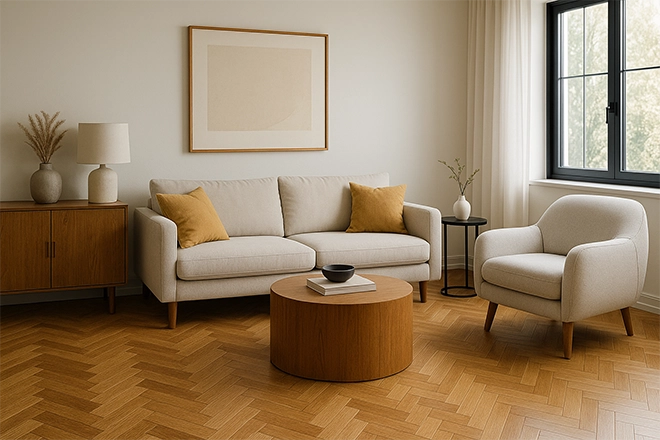
- Herringbone: Rectangular tiles are laid in a zigzag pattern where each end meets at a 90-degree angle, creating a broken V shape that adds movement and energy to the floor.
- Chevron: Similar to herringbone, but the tile ends are cut at an angle so they meet in perfect points, forming continuous V shapes for a sleek, modern look.
- Basketweave: Tiles are arranged in groups that mimic the over-under effect of woven fabric, giving the surface a tight, grid-like appearance.
- Brick: Rectangular blocks are staggered in straight lines, resembling classic brickwork for a clean, simple pattern with a traditional feel.
- Versailles: A mix of squares and diagonals interlocked in a framed layout that mimics the grand, formal floors of French palaces.
Each pattern creates a different visual rhythm in the room. Herringbone adds movement, while basketweave brings a more subtle texture. For dramatic effect, Versailles combines squares and diagonals in a blocked layout that feels high-end and traditional.
Designers often mix wood tones or alternate tile directions to add more dimension. This flexibility allows parquet to be used in both modern and classic homes.
How Do You Maintain and Clean Parquet Floors?
Routine maintenance is simple: sweep or vacuum regularly and mop with a damp (not wet) microfiber cloth.
Use a wood-safe cleaner that doesn’t leave residue.
Avoid steam mops, as the heat and moisture can loosen glued tiles or damage the finish.
To protect the flooring, add felt pads under furniture and use entry rugs in high-traffic areas.
Maintain indoor humidity between 35–55% to prevent swelling or shrinkage.
For solid wood parquet, refinishing every 10–15 years will keep the surface looking fresh.
Pattern Makes Perfect: Explore Parquet with Stair Creations
Parquet flooring is all about detail, craftsmanship, and getting the pattern just right—three things Stair Creations is known for in every home we work on. Whether you’re remodeling a staircase landing or upgrading your flooring throughout, we can help you choose and install a parquet design that fits your space and style.
Ready to add timeless elegance underfoot? Fill out our contact form today or give us a call to get started.