You’re standing in the flooring aisle holding two samples that both look like real wood. The salesperson is throwing around terms like wear layer and dimensional stability, and you just want a floor that lasts. So which one actually wins?
The fast verdict: solid hardwood is one thick board of real wood, sands and refinishes for generations, and belongs in dry, climate-controlled rooms above grade. Engineered hardwood is a real hardwood top layer over a plywood core, handles moisture and temperature swings far better, and goes places solid simply cannot. Pick solid for traditional bedrooms and living rooms with a wood subfloor. Pick engineered for basements, slabs, condos, and homes with radiant heating.
Now the details that actually change your decision.
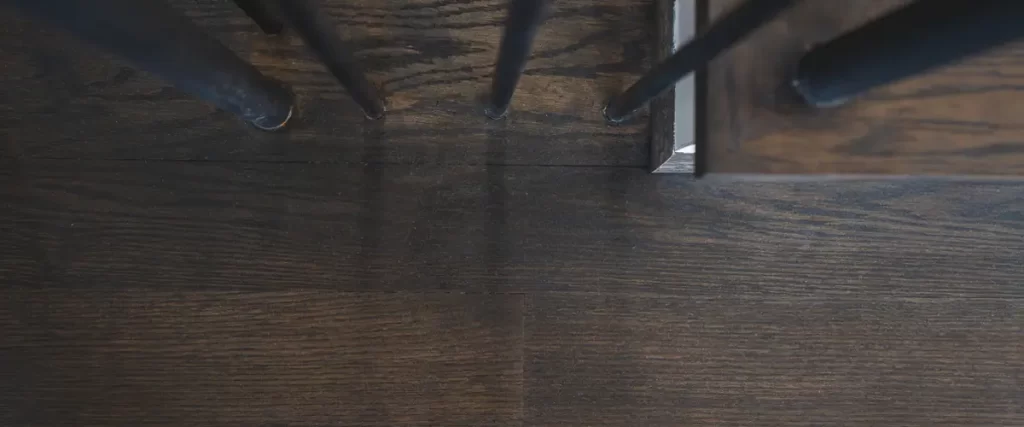
What’s Actually Inside Each Plank
A solid hardwood plank is one piece of wood, top to bottom. Usually 3/4 inch thick, milled from oak, hickory, walnut, maple, or another wood species, and sold either raw for site finishing or as prefinished solid hardwood flooring sealed at the factory. Same wood throughout, no layers underneath.
An engineered plank is a stack. The top veneer layer is real hardwood, often European oak, sitting on a plywood core or sometimes a high-density fiberboard substrate. Quality engineered planks use 5 to 9 plies of high-quality plywood with grain running in cross directions, which is what gives the board its dimensional stability when humidity shifts.
Both products are real wood. They just earn that label differently.
Side by Side
| Factor | Solid Hardwood | Engineered Hardwood |
| Construction | Solid piece, all one species | Top layer veneer over plywood core or HDF |
| Thickness | About 3/4 inch | 3/8 to 3/4 inch |
| Wear layer | The whole board | 1mm to 6mm of real hardwood |
| Refinishes | 4 to 7 times typically | 1 to 3 times if veneer thickness allows |
| Best subfloor | Wood subfloor only | Concrete subfloor, wood, or floating |
| Radiant heat | Risky | Compatible with most engineered formats |
| Plank widths | Standard widths, mostly under 5 inch | Wide planks up to 9+ inch easily |
| Lifespan | 50 to 100 years with care | 20 to 50 years |
| Moisture tolerance | Low | Higher, more dimensionally stable |
When Solid Hardwood Wins
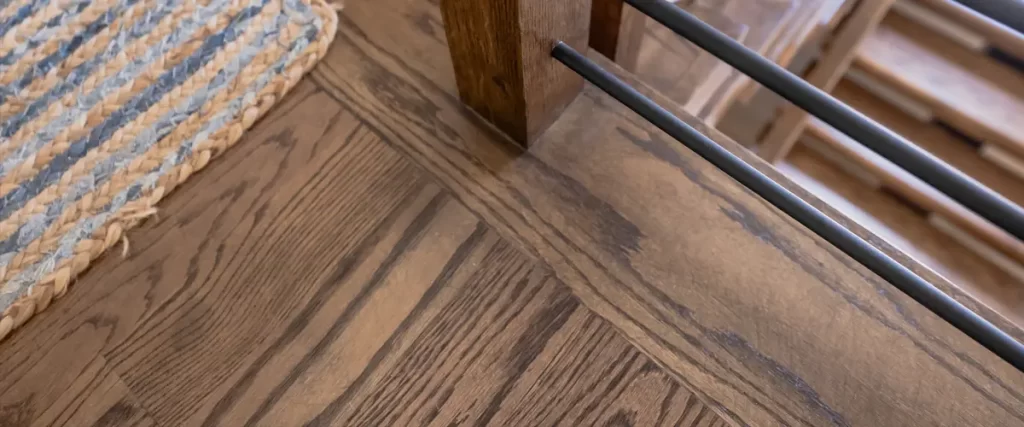
There’s a reason traditional solid hardwood flooring still sets the gold standard for resale value. A properly maintained solid wood floor can outlast the house it sits in.
It shines when:
- The room stays dry and stable. Living rooms, dining rooms, bedrooms, and hallways above grade.
- You want maximum refinishes. Sand back to fresh wood three or four more times across decades.
- Custom finish matters. Wire brushed, hand scraped, custom stains, you keep full control on site.
- You love narrow to medium widths. A 3-inch white oak strip floor in solid wood ages into timeless beauty.
The catch is moisture. Solid wood reacts to humidity swings every season. The EPA recommends keeping indoor humidity between 30 and 50 percent to protect wood and prevent mold growth, and that range is non-negotiable for solid floors. Stay inside it, and a solid floor stays flat for fifty years. Drift too far outside, and you’ll see winter gaps and summer cupping show up fast.
If you want to know which species actually hold up best to daily life, our guide comparing red oak and white oak walks through grain, color, and durability before you commit to a wood.
When Engineered Hardwood Wins
Engineered hardwood offers everything solid wood gives you visually, with a backbone built for reality. Layered construction resists temperature fluctuations and moisture concerns far better than a solid piece, which is why engineered formats own the basement, slab, condo, and radiant heat market.
A few honest strengths:
- Goes anywhere. Concrete slabs, wood frame, or floating over underlayment.
- Wider boards possible. A 7 to 9 inch plank in solid is expensive and prone to movement; in engineered, wide planks are normal.
- Radiant heat friendly. Most engineered hardwood is rated for radiant heating systems, which opens up warm bathroom and kitchen floors.
- Faster install. Click lock style planks float together with no nails or glue.
- Often more water-resistant. Some engineered formats handle splashes that would ruin solid floors.
The thing to verify is the veneer thickness. A 1mm wear layer cannot be sanded. A 4 to 6mm top layer can be refreshed once or twice, which gets engineered closer to solid hardwood territory in terms of lifespan. Always ask for the veneer thickness before you buy a single plank.
If wood overall feels rich for your project, our breakdown of every wood flooring type compares solid, engineered, bamboo, and a few others side by side.
A Simple Decision Framework
Three questions, in this order:
- Where is the floor going? Anything below grade or directly on a slab is engineered.
- Do you have radiant heating? Engineered, almost every time.
- What’s your time horizon in this home? A 20 year window, either works. Half a century or more, solid pulls ahead on refinishes alone.
FAQ
Is engineered hardwood real wood?
Yes. The top layer is genuine hardwood, the same species you’d see in solid. The difference is the engineered base underneath.
Which is the more environmentally friendly option?
Engineered uses less slow-growth hardwood per square foot, which can lower environmental impact. Look for Forest Stewardship Council certification on the wood and low-emission ratings on the core.
How do I clean either one?
A soft broom, a microfiber mop, occasional damp mopping with a wood-safe cleaner. Skip the steam mop on both.
Can engineered hardwood go in a bathroom?
A powder room, usually yes. A primary bath with a soaking tub, no. Standing water still damages any wood floor.
Does solid hardwood add more resale value than engineered?
Both add value. Buyers and appraisers treat real wood as real wood. Quality of installation, finish, and species often matters more than the format itself.
Skip Straight to a Finished Floor
Reading about veneer thickness, expansion gaps, acclimation periods, and moisture meter readings is one path. Picking up the phone is the other. We measure your space, check your subfloor, walk you through wood species and finish options, and install a floor that lays flat and looks beautiful for decades. Your weekends stay intact, the guesswork stays on our side, and you get to enjoy real wood floors that feel right under your feet from the very first morning you wake up to them.
Ready to talk about your project? Call us at (703) 902-0009 or message us here about hardwood flooring installation done by people who actually love this work.