Keep Your Floors Looking Flawless
Do your hardwood floors have a few scuffs or dull spots that appeared after tracking in dirt from weekend strolls through Frying Pan Farm Park? Wondering what really works to keep them smooth, shiny, and damage-free for the long haul?
In this post, you’ll learn simple habits, cleaning tips, and protective upgrades that keep hardwood floors in top condition.
By the end, you’ll know how to preserve that rich, elegant finish and extend the life of your flooring so it looks as good as the day it was installed.
How to Protect Hardwood Floors
- Sweep or vacuum often to remove grit.
- Use entry mats and area rugs in high-traffic zones.
- Wipe up spills right away.
- Add felt pads to furniture legs.
- Trim pet nails regularly.
- Avoid wet mopping; use minimal liquid.
- Refinish the surface every few years.
Hardwood Floor Cleaning and Maintenance Habits
Clean the Right Way
Sweep or use a dust mop daily to remove dust, dirt, and other debris that can grind into the floorboards.
Avoid water-based methods or wet mops that can cause too much moisture to soak into the wood. Instead, use wood flooring cleaners that won’t leave residue or dull the finish.
Always test new products in a small, hidden area before applying them throughout the room.
What to Avoid
Harsh chemicals or excessive liquid can weaken the sealant, making the wood more vulnerable to scratches and stains.
Avoid vinegar or steam-based systems, which can dull the surface and strip protective coatings.
When in doubt, follow the guidelines set by the National Wood Flooring Association for the safest products and cleaning methods.
Protecting Wood Floors with Entry Defense and Rugs
Entry Mats that Stop Grit
Entryways are where most damage begins.
Place mats both inside and outside your main doors to catch the sand and leaf litter that seem to follow every visit to Meadowlark Botanical Gardens. A mat with a coarse texture can stop dirt effectively while still complementing your home’s style.
Keep the mats clean by shaking or vacuuming them weekly.
For rooms with multiple entry points, use area rugs near each door to protect the wood flooring from scuffs and small scratches.
Safe Rug and Pad Materials
Avoid latex-backed rugs, which can stick to the floor’s finish and cause discoloration.
Choose breathable, non-slip rug pads made from felt or untreated rubber. These materials provide traction without trapping moisture or leaving residue.
What to Skip Under Rugs
Many adhesive-style pads, double-sided tapes, or mesh backings promise extra grip but can pull at the floor’s finish when removed.
Over time, they may even leave a sticky film or uneven texture.
Instead of these quick fixes, stick with properly fitted rug pads that protect without damaging the surface.
Protect Wood Flooring from Furniture Legs, Footwear, and Pets
Use Furniture Pads
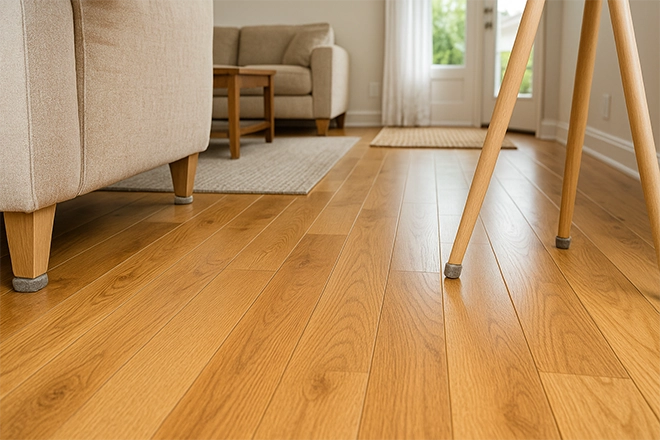
Add felt pads to the bottom of chairs, couches, and tables so they glide smoothly across the wood instead of grinding against it.
For larger pieces or heavy furniture, use furniture sliders that let you gently slide items when rearranging the room.
Regularly check these pads and replace them if they become worn or dirty to avoid scratching the hardwood floor’s finish.
Remove Shoes
High heels, cleats, and even work boots can dent wood floors easily.
Encourage guests and family to remove their shoes before entering the main living areas.
Create a small shoe station near the front or garage door to make this habit effortless.
Keeping shoes off not only prevents dents but also helps reduce the amount of dirt and grit tracked throughout the house, cutting down on extra cleaning and wear.
Pet Nail Care
Pets add life to a home, but their nails can be rough on wood floors.
Trim them regularly to keep the surface free from scratches and gouges. Place rugs in favorite pet spots to provide a buffer between paws and the flooring.
If you hear clicking as your pet walks, that’s a sign the nails need trimming.
Create Kid Play Zones
Toys, blocks, and rolling cars can be tough on floors, especially in playrooms.
Use soft area rugs or foam mats to create designated play spaces that absorb impact and protect the wood underneath.
Choose mats that don’t stick to the floor’s finish and are easy to clean.
Teaching kids to play in these spaces helps prevent damage while keeping the rest of your wood flooring looking new.
Moisture Control for Hardwood Floors
Quickly Clean Spills and Household Liquids
Wood floors are especially sensitive to moisture, so quick action is key.
Wipe up spills as soon as they happen to prevent staining or swelling.
Avoid letting water sit near areas like the kitchen sink or bathroom door, where drips are common.
Using coasters under plant pots and furniture that holds drinks can also stop small leaks before they cause problems.
Keep Water Outside
Rain, snow, or sprinklers can all bring water into your house.
Place water-resistant mats just inside exterior doors to catch wet shoes and bags.
Encourage everyone to remove footwear before walking onto the hardwood flooring.
For added protection, keep a towel nearby to dry any remaining moisture on the mat.
Indoor Humidity Balance
Hardwood flooring expands and contracts based on humidity levels, which can cause cracks or gaps between boards.
Use a humidifier in the winter when the air is dry and a dehumidifier in humid months to maintain stable indoor humidity levels. This balance prevents the wood from shrinking or swelling, extending the floor’s life and keeping it smooth underfoot.
Prevent Sunlight from Fading Your Flooring
Sunlight can gradually dull and fade beautiful hardwood floors.
Use curtains, blinds, or other window treatments to filter UV rays during the brightest hours of the day.
Rearrange area rugs and furniture occasionally to ensure even exposure across the floor.
If a particular spot gets direct light, consider applying a UV-resistant sealant during your next refinishing to reduce future sun damage.
Professional Hardwood Flooring Care and Refinishing
When to Refinish Hardwood Floors
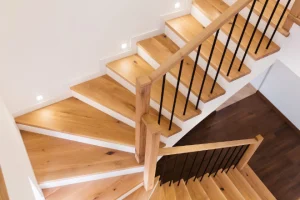
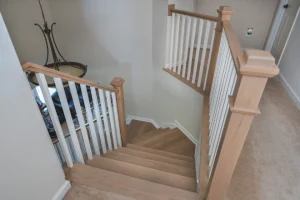
Even the best-maintained wood floors will eventually need a touch-up, just as the century-old staircases inside Historic Blenheim need a fresh coat to stay beautiful.
A professional refinishing process every few years renews the protective layer and enhances the color of the wood.
Signs it’s time include dull patches, visible scratches, or spots that look dry and worn.
Refinishing adds a new coat that seals and strengthens the surface, helping it resist further damage.
Why Pros are Helpful
Attempting these steps on your own can lead to uneven finishes or thin protective coats that wear out too quickly.
Professional care ensures your flooring receives the right sanding, staining, and sealing methods. Hiring a trained team means the work is done efficiently and in line with National Wood Flooring Association standards.
With their help, your hardwood floor will maintain its natural beauty, last longer, and require less extra work over time.
Manufacturer Guidance and Special Stains for Hardwood Floors
Follow Product-Specific Instructions
Each type of hardwood floor has a unique finish that responds differently to cleaners and products.
Always review the manufacturer’s recommendations before using anything new. This step helps you maintain the protective coating and avoid accidental damage.
Handling Tough Messes
Occasionally, spills like nail polish or oil stains need more than a quick wipe.
For these, follow the manufacturer’s approved methods or consult a professional before trying to remove them.
Using the wrong cleaner can leave residue or strip the floor’s finish entirely.
What type of wood floor do you have?
Get Floors You’re Happy to Care for with Stair Creations
At Stair Creations, every project is about craftsmanship and care that preserves your home’s beauty. Our team specializes in installing hardwood flooring that looks so good you’ll love keeping it beautiful.
If your floors are showing signs of wear or you want new flooring, fill out our contact form today or give us a call. Let Stair Creations bring out the best in your wood floors with expert attention and lasting results.