Tension and Attention: What Your Cable Railing Will Really Cost
Are you trying to figure out the true cost per foot of cable railing before committing to a new railing system?
Wondering why one quote feels reasonable while another jumps way past your budget for what seems like the same deck?
In this guide, you’ll learn how cable railing cost is calculated, what affects the price per linear foot, and how materials, installation, and design decisions change your overall cost.
By the end, you’ll understand how to build a realistic budget and choose the right cable railing systems for your space without sacrificing safety, durability, or style.
How Much Does Cable Railing Cost Per Foot?
If you just want the numbers, here’s what many homeowners see in today’s market:
- $75–$260 per linear foot installed
- $85–$180 per linear foot is a commonly cited 2025 range
- $20–$50 per linear foot for professional installation
- Around $9,000 for a 50-foot railing system on average
That cable railing cost per foot can vary widely depending on the materials you choose, the total length of your project, and the complexity of your installation.
Whether you’re installing cable deck railings on a deck in McLean, VA, or upgrading an interior staircase in Fairfax, VA, the numbers shift based on several factors.
Average Cable Railing Cost in 2025
National Cost Ranges
The total cost for cable railing systems typically falls between $3,000–$15,000, depending on size and customization options.
For example:
- A 30-foot system: ~$3,600–$3,900
- A 60-foot system: ~$10,000–$10,500
The reason that range is so wide comes down to materials, labor, corners, stairs, and design complexity. A straight run across a small deck will cost less than a wraparound railing system with multiple corners and elevation changes.
When you’re working with a design-focused team in areas like Centreville, VA, or Chantilly, VA, you’ll typically review layout options that affect the total linear foot count before locking in your budget.
Cost by System Type Per Linear Foot
Different cable railing systems carry different price expectations:
- DIY cable railing kits: $65–$95 per foot
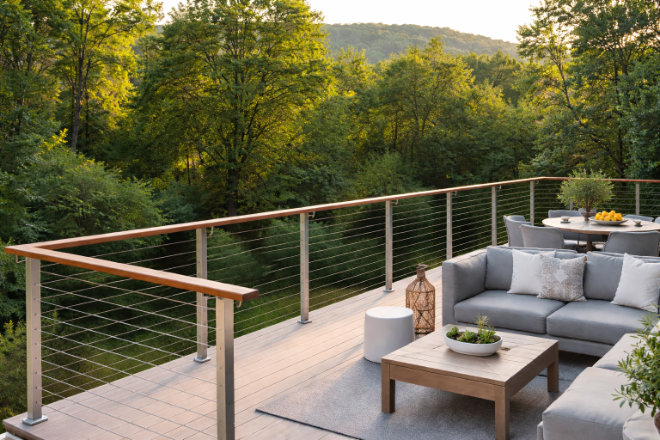
- Aluminum systems: $90–$150 per foot
- Stainless steel cable railing systems: $100–$180+ per foot
DIY installations can reduce upfront cost, but you’ll need proper woodworking tools, precise layout skills, and the patience to tension each cable correctly.
A stainless steel cable system with metal posts will cost more initially, but it offers durability, corrosion resistance, and minimal long-term maintenance.
At Stair Creations, we regularly walk you through material and layout decisions during the design phase so you can understand how system type and total length affect your final investment before installation begins.
Cable Railing Cost by Project Size
Estimated Total Cost by Length
Here’s how cable railing costs scale based on total length:
| Total Length (Linear Feet) | Estimated Total Cost |
|---|---|
| 20 ft | $1,500–$5,200 |
| 25 ft | $1,900–$6,500 |
| 35 ft | $2,600–$9,100 |
| 40 ft | $3,000–$10,400 |
| 45 ft | $3,400–$11,700 |
| 50 ft | $3,800–$13,000 |
| 55 ft | $4,100–$14,300 |
| 60 ft | $4,500–$15,600 |
The more linear foot coverage you need, the higher your overall cost. But design plays a role too. Using fewer posts in a properly engineered cable system can reduce materials and hardware expenses. On the flip side, more posts and additional corners will quickly add cost.
If your deck design in Alexandria, VA, or Vienna, VA includes multiple turns or stairs, expect those transitions to increase labor and material requirements.
Labor Costs for Cable Railing Installation
Per-Foot Labor Pricing
Professional installation generally runs $20–$50 per linear foot. That includes:
- Post alignment
- Drilling and hardware setup
- Stainless steel cable threading
- Proper tensioning
- Ensuring the railing system meets local building codes
This labor is what ensures your cable railing provides safety and functions as a sturdy barrier.
At Stair Creations, we are licensed in both VA and MD and are members of SMA, NWFA, NARI, and the Northern Virginia Building Industry Association, so when we complete installation, you can expect code-compliant work performed by experienced craftsmen.
Hourly Rates
Some installers charge $50–$100 per hour rather than per linear foot. Complex staircase layouts, tight corners, and difficult deck access can increase labor time.
DIY vs Professional Installation
DIY can look attractive on paper. But keep in mind:
- Cable must be tensioned correctly.
- Improper spacing may violate local building codes, so it’s especially important to understand proper stair railing height requirements.
- Re-tensioning may be required if the system isn’t installed properly.
Professional installation often protects you from long-term maintenance problems and ensures your new railing system performs as it should, especially when compared to a DIY stair railing installation.
Stair Creations follows a structured process that includes a phone consultation, on-site design review, contract approval, pre-job walkthrough, installation updates, final cleanup, and a post-job walkthrough, so you know exactly what to expect at every stage.
Material Costs That Impact Price Per Foot
Cable Types
The cable itself influences both price and durability:
- Galvanized carbon steel cable: $0.35–$0.45 per linear foot
- Stainless steel cable: $0.50–$1.70 per linear foot
Stainless steel is highly corrosion-resistant and offers superior rust resistance for outdoor applications.
While it increases upfront cost, it often lowers long-term cost because it requires less maintenance.
Material Costs Per Post
Posts are a major part of your cable railing materials:
| Post Material Type | Estimated Cost Per Post |
|---|---|
| Rounded stainless steel posts | $110–$200 |
| Squared stainless steel posts | $140–$230 |
| Aluminum posts | $65–$125 |
| Wood posts | $20–$120 |
| Vinyl/composite posts | $25–$35 |
Wood posts can reduce the initial price but typically require more maintenance and proper care over time. Steel posts and aluminum posts are considered low-maintenance materials that offer durability and a modern aesthetic appeal.
In modern homes around Oakton, VA, many homeowners prefer sleek metal posts for a contemporary design.
Handrail Costs Per Linear Foot
Your top rail and handrail material also affect cable railing cost per foot:
| Handrail Material Type | Estimated Cost Per Linear Foot |
|---|---|
| Stainless steel handrails | ~$20 per foot |
| Aluminum handrails | $30–$60 per foot |
| Wood handrails | $30–$60 per foot |
| Vinyl/composite handrails | $10–$20 per foot |
A wood railing may pair nicely with a wood deck, while stainless steel creates a clean, modern finish that complements contemporary designs.
Stair Creations offers railing upgrades in premium materials, including stainless steel, wrought iron, glass panels, and custom wood options, so you can align your railing system with your home’s design goals.
Factors That Influence Cable Railing Cost Per Foot
Material Selection
Your choice of cable railing materials has a direct impact on both upfront cost and long-term maintenance.
Stainless steel systems are corrosion-resistant, durable, and ideal for outdoor deck applications. Wood components can look beautiful but require more maintenance.
Choosing low-maintenance materials may increase initial price but reduce long-term cost.
Project Complexity
Several factors can increase the overall cost:
- Stairs and staircase transitions
- Multiple corners
- Height differences
- Code-required post spacing
Corners alone can add 20%–30% to your cost because they require additional posts, hardware, and cable terminations.
System Components Included in Pricing
When evaluating cable railing cost, pricing typically includes:
- End, intermediate, and corner posts
- Top rail
- Stainless steel cable and tensioning hardware
- Mounting brackets and fasteners
- Finish coatings
- Labor if professionally installed
Understanding what’s included helps you compare multiple quotes accurately and avoid hidden add-ons.
Example Cost Scenarios
30-Foot Residential Deck with Basic Aluminum System
| Cost Category | Estimated Cost |
|---|---|
| Materials | ~$2,700 |
| Installation | ~$900–$1,200 |
| Total | ~$3,600–$3,900 |
This is often a cost-effective option for smaller deck applications.
60-Foot Wraparound Deck with Stainless Steel System
| Cost Category | Estimated Cost |
|---|---|
| Materials | ~$7,500 |
| Installation | ~$2,500–$3,000 |
| Total | ~$10,000–$10,500 |
Larger decks require more posts, more cable, and more hardware, which increases both material and labor costs.
Budgeting and Cost-Saving Strategies
Getting Competitive Pricing
Always request multiple quotes, as you would when reviewing stair banister installation costs, to compare materials and the scope of labor. Compare materials, post counts, and installation scope carefully. Two bids may look similar on paper but vary greatly depending on what’s included.
You can reduce overall cost by:
- Designing with fewer posts when structurally appropriate
- Limiting unnecessary corners
- Choosing galvanized cable for less visible areas
- Mixing wood and metal strategically
Smart planning allows you to create a durable, modern railing without overspending.
Hybrid Purchasing Strategy
Some homeowners purchase cable railing kits or components separately and hire professionals to install them.
This approach can reduce upfront labor costs while ensuring proper setup and safety.
2025 Pricing Considerations
Cable railing cost will continue to vary greatly depending on materials, labor demand, and customization options.
When building your budget, focus on:
- Total linear foot required
- Material selection
- Installation complexity
- Long-term maintenance expectations
When you balance durability, corrosion resistance, safety, and aesthetic appeal, you can create a cable railing system that looks sleek, performs reliably, and holds up for years.
From Per Foot to Fully Finished with Stair Creations
When you’re ready to install a new railing system, you need more than just numbers; you need experienced craftsmanship and a clear process.
Stair Creations provides stair and railing design, fabrication, and installation services, delivering customized solutions with transparent communication and quality workmanship from consultation to final walkthrough.
Choosing the right cable railing system is about balancing cost, durability, and long-term maintenance. If you want a modern, low-maintenance solution installed by a licensed and experienced team, fill out our contact form today or give us a call.