From Plush to Polished: What Will Your Stairs Really Cost?
Are you staring at your carpeted stairs, wondering what it would actually cost to replace carpet with hardwood?
Are you trying to figure out whether this home improvement project fits your budget or is going to spiral?
In this guide, you’ll learn the real cost to replace carpet stairs with wood, how installation costs break down per stair, what material costs affect your total cost, and when refinishing usable wood makes more sense than full replacement.
By the end, you’ll know exactly how to plan your project, where you can save money, and how to make a decision that improves both your interior design and long-term value.
How Much Does It Cost to Replace Carpet Stairs With Wood?
If you want the quick answer, here’s what most homeowners can expect:
- $75–$200 per stair for new hardwood stairs
- $100–$200 per stair when materials and labor costs are combined
- A 13-step staircase typically runs $1,300–$2,600 total
- If there’s usable wood under the existing carpet, refinishing costs about $40–$75 per step
- If you’re only removing carpet and the wood underneath is in good shape, removal may run $100–$300 total
If your project is more of a light stair remodeling refresh rather than full hardwood replacement, you’re looking at $4k for a slight refresh of a single staircase that includes new LVP flooring and paint touchups, typically completed in 1–2 weeks.
Stair Creations offers a stair remodeling option starting at $4k for a slight refresh of a single staircase, including new LVP flooring and painting touchups, typically completed in 1–2 weeks, so you know exactly what’s included before you move forward.
Contact us today about your staircase project.
Cost Per Stair Breakdown
New Hardwood Installation Per Step
When you replace carpet on stairs with new hardwood treads and risers, the total cost usually lands between $100–$200 per stair, especially if you’re replacing stair treads instead of refinishing existing stairs.
| Item | Cost Range |
|---|---|
| Hardwood treads and risers | $30–$50 per step |
| Labor costs | $50–$75 per step |
| Combined total per stair | $100–$200 per step |
This is labor-intensive work.
Each tread requires removing carpet, pulling tack strips, leveling the surface, cutting around corners, and precise professional installation to ensure durability in high-traffic areas.
Refinishing Existing Wood Under Carpet
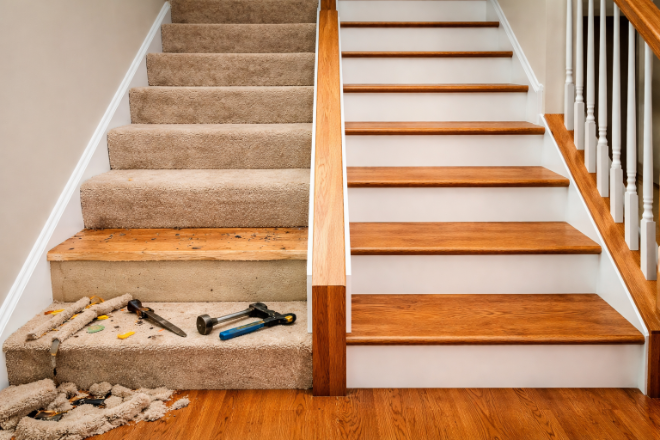
If you remove existing carpet and discover usable wood underneath, learning how to refinish hardwood stairs can help you decide whether refinishing at $40–$75 per step makes more sense than full hardwood replacement.
Refinishing typically costs $40–$75 per step and includes removing carpet, sanding the treads, and applying stains and a protective finish.
This only works if your existing stairs were built with hardwood rather than basic plywood or builder-grade materials.
Carpet Removal and Disposal Costs
Before hardwood installation begins, you’ll need to remove the carpet and dispose of it.
| Service | Cost Range |
|---|---|
| Carpet removal | $1–$5 per square foot |
| Laminate removal | $1–$3 per square foot |
| Disposal fees | $0.40–$0.50 per square foot |
| Carpet removal only (if wood is usable) | $100–$300 total |
DIY-friendly homeowners sometimes handle carpet removal themselves to save money, but you still need to factor in disposal costs and cleaning.
Total Project Cost by Stair Count
13-Step Hardwood Replacement Example
For a standard 13-step staircase:
| Project Scope | Cost Range |
|---|---|
| Full hardwood replacement (13 steps) | $1,300–$2,600 |
| Per-step basis | $100–$200 per stair |
The more complex your staircase, the more labor-intensive the installation becomes, which increases labor costs and overall price.
Carpet Installation Benchmarks for Comparison
If you’re debating new carpet vs. hardwood stairs, comparing a wood staircase vs a carpet staircase can clarify whether lower upfront carpet installation costs outweigh the long-term durability and resale value of hardwood stairs.
| Number of Steps | Cost Range |
|---|---|
| 11 steps | $150–$400 |
| 12 steps | $170–$430 |
| 13 steps | $180–$470 |
| 14 steps | $200–$500 |
| 15 steps | $210–$540 |
| 16 steps | $225–$580 |
| 17 steps | $240–$610 |
Basic carpet is more affordable upfront, but carpet on stairs tends to wear quickly in high-traffic areas, especially in homes with kids.
Hardwood Material Costs
Solid Hardwood Pricing
Material choices significantly affect your total cost.
| Hardwood Type | Cost Range per Square Foot |
|---|---|
| Domestic species | $3–$8 |
| Exotic or higher end species | $10–$15+ |
Red oak and oak remain popular because they balance durability and price. Maple offers a smoother grain and modern interior design appeal but can increase material costs.
Engineered Hardwood Pricing
Engineered hardwood runs $3–$12 per square foot.
It can be a cost-effective alternative to solid hardwood flooring, though stair installation still requires precision and professional installation for best results.
Finishing and Underlayment Costs
| Item | Cost Range per Square Foot |
|---|---|
| Stains and finishing | $1–$2 |
| Underlayment or moisture barrier | $0.50–$1.50 |
If you’re coordinating hardwood stairs with hardwood flooring throughout your house, aligning materials helps boost resale value and create a cohesive look.
Labor Costs for Hardwood Installation
Hardwood Installation Labor
| Labor Type | Cost Range per Square Foot |
|---|---|
| Hardwood installation labor | $3–$8 |
| Typical average | $4–$6 |
Stairs are more detailed than open flooring, so square foot labor rates don’t always reflect the complexity of stair work.
Stair-Specific Labor
| Labor Scope | Cost Range |
|---|---|
| Labor per stair | $50–$75 per step |
| Combined materials and labor | $100–$200 per step |
Professional installation ensures your staircase remains level, secure, and durable for long-term value.
Additional Cost Factors That Can Increase Total Price
Staircase Repairs
| Repair Type | Cost Range |
|---|---|
| Stair or railing repair | $4.50–$8 per square foot |
| Banister installation | $300–$450 |
Old carpet can hide structural issues. Once you begin removing carpet, you may uncover damage that increases your total cost.
Staircase Design and Complexity
| Design Factor | Cost Impact |
|---|---|
| Extra landing area | Approximately $50 |
| Extra per spindle | $2–$15 |
| Custom cuts | Increases labor costs |
Curved stairs, tight corners, and custom interior design details all add time, labor, and money to the project.
Hardwood vs Carpet Cost Comparison
Material Cost Comparison
| Material | Cost Range per Square Foot |
|---|---|
| Basic carpet | Approximately $2 |
| Hardwood | $3–$15 |
Hardwood is the more expensive material upfront, but it offers better durability and long-term value compared to basic carpet.
Installation Cost Comparison
| Installation Type | Cost Range per Square Foot |
|---|---|
| Carpet installation | $0.50–$1 |
| Hardwood installation | $3–$8 |
Hardwood installation is more labor intensive, but carpet often requires professional cleaning and replacement sooner, which affects your long-term budget.
Ways to Reduce Costs
DIY Carpet Removal
DIY carpet removal can save $1–$2 per square foot, reduce labor costs, and eliminate some removal costs.
While DIY installation of hardwood stairs is technically possible, it is not an easy project.
Mistakes can lead to uneven treads, squeaks, and safety issues. In most cases, professional installation protects both your money and your staircase investment.
Step Up Your Staircase Strategy With Stair Creations
Replacing carpet stairs with wood is not just about swapping materials.
It is about upgrading durability, improving resale value, and creating a staircase that actually fits your home’s interior design and long-term goals.
Stair Creations specializes in stair remodeling, hardwood stair installation, railing upgrades, and finishing work that transforms outdated carpet stairs into clean, durable hardwood stairs built to last. We walk you through design, material choices, prep work, installation, and finishing so you know exactly what your total cost includes before we begin.
If you are ready to replace carpet and upgrade your staircase the right way, fill out our contact form today or give us a call. Let’s talk through your budget, your goals, and how we can help you move forward with confidence.