If you want one answer, white oak is the smartest pick for most American homes. It balances hardness, color flexibility, availability, and resale appeal. Hickory ranks higher on raw toughness, walnut wins on warmth and luxury, red oak rules tradition and budget, and hard maple suits modern minimalist spaces. The “best” really depends on what your floor lives through, how you want it to age, and the way you actually use your home.
What Actually Makes a Hardwood Good for Floors
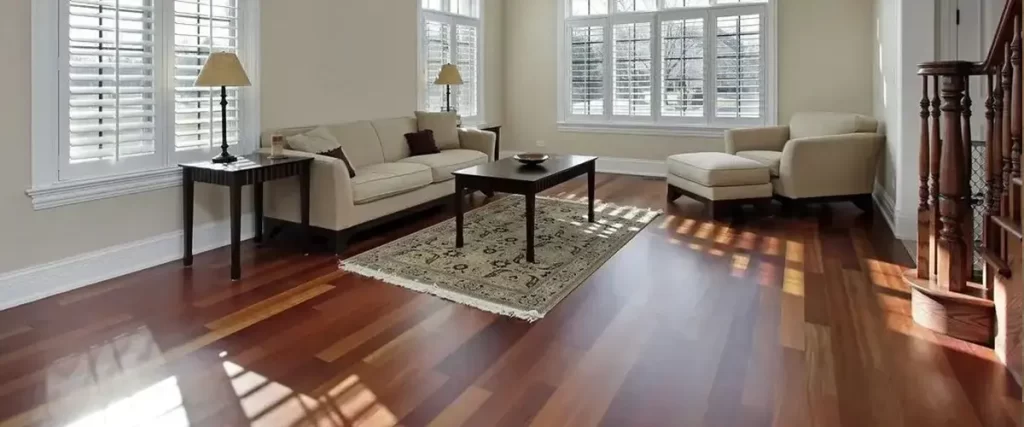
Three things decide how a wood floor behaves over time: hardness, grain pattern, and how the species accepts finishes.
Hardness gets measured on the Janka scale, a test maintained by the USDA Forest Service’s Forest Products Laboratory in Madison, Wisconsin. A small steel ball is pressed halfway into the wood, and the force required, in pounds, becomes the rating. Higher numbers mean harder wood and better resistance to dents.
Grain pattern controls visual character and how well a floor hides everyday wear. Open, dramatic grain forgives scratches and life with kids. Tight, subtle grain reads calmer and more modern but shows every scuff under direct sunlight.
Finish behavior matters too. Some hardwood species accept stain unevenly, while others stay close to their natural color regardless of what you put on top.
The Contenders, Ranked by Janka
| Wood Species | Janka Hardness | Style Personality |
| Brazilian Cherry | ~2,350 | Rich red-brown, exceptional hardness, bold grain |
| Hickory | ~1,820 | Wild color variation, rustic charm, very tough |
| Hard Maple | ~1,450 | Light blonde, subtle grain, modern feel |
| White Oak | ~1,360 | Neutral tan, straighter grain, takes any stain |
| Red Oak | ~1,290 | Warm pink-red, dramatic grain, classic |
| Black Walnut | ~1,010 | Deep medium brown, soft elegant grain |
A floor at 1,290 Janka (red oak) is plenty for a normal household. Anything above 1,500 handles big dogs, dropped pans, and the chaos of laundry rooms without flinching.
White Oak: The Workhorse
White oak quietly took over the American flooring market over the past decade. The straighter grain reads cleaner than red oak’s swirls, the color sits in a neutral tan zone that takes light, dark, gray, and natural finishes beautifully, and it’s harder than red oak by a small but real margin.
European oak is the same species family grown across the Atlantic, often offered in wide planks with a softer, more rustic character. Both are excellent picks.
Our comparison of red oak and white oak covers the same logic that applies to floors.
Red Oak: The Classic
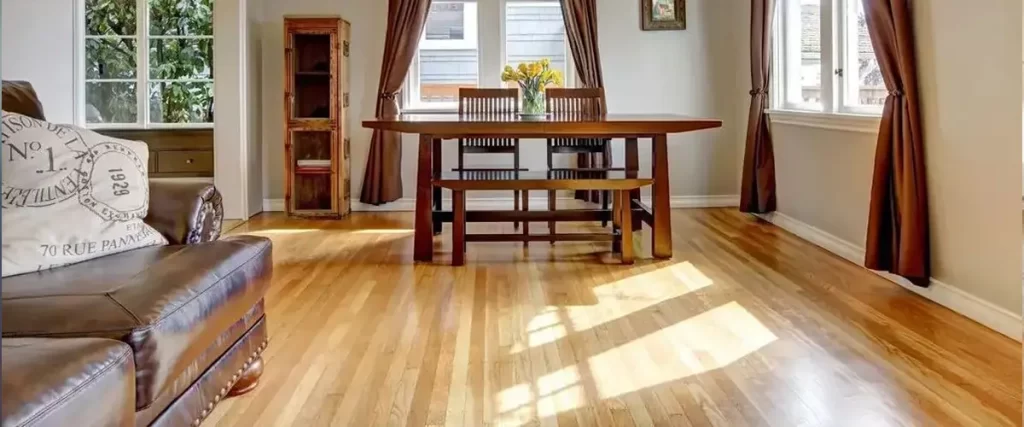
Red oak earned its place over a century in American homes, and it still holds up today:
- Cheaper per square foot while still being a true hardwood.
- Widely available through most lumber yards and prefinished flooring lines.
- Better at hiding wear thanks to dramatic grain and pinkish undertones.
- A perfect match if you already have red oak elsewhere in your house.
Red oak’s one real weakness is its strong, warm tone. Going gray or whitewashed on red oak is possible, just harder than on white oak.
Hickory: When the Floor Has to Take a Beating
Hickory flooring is the toughest domestic species you’ll commonly see installed. A Janka rating near 1,820 puts hickory well above both oaks, which makes it ideal for high traffic areas and homes with active dogs.
The look is unmistakable. A single hickory board mixes pale yellow heartwood, chocolate brown stripes, deep mineral streaks, and dramatic knots all in one piece. That rustic charm pairs naturally with farmhouse, mountain, and craftsman interiors. Modern minimalist homes usually pick something else.
Black Walnut: The Luxury Pick
Walnut sits around 1,010 Janka, which is softer than the oaks. That trade-off is the price of its color. Black walnut delivers a deep, warm chocolate brown that no stain on a lighter wood can truly imitate.
Walnut feels softer underfoot, which some people love and big dogs do not respect. The floors dent more easily, then develop a rich patina that owners tend to grow into rather than fight. This is the species you pick when looks lead the decision.
Hard Maple and Brazilian Cherry
Hard maple gives you a clean, light blonde floor with minimal knots and subtle grain, which fits modern homes wanting wood without oak’s warmth. It refinishes cleanly but stains unevenly, so maple looks best in its natural color or very light tones.
Brazilian cherry runs the opposite direction at 2,350 Janka, nearly bulletproof, with a wood’s natural color that deepens toward rich red-brown under direct sunlight. Sourcing is more limited than domestic species, so verify availability before falling in love with a sample.
Match the Wood to the Room
A few practical pairings:
- Open-plan main floor with kids and a dog: white oak or hickory.
- Formal living and dining: walnut or red oak.
- Modern build with lots of natural light: hard maple or rift-sawn white oak.
- Cabin, farmhouse, or character home: hickory all the way.
- Historic home with existing red oak: stay with red oak for visual flow.
Both solid and engineered hardwood are real wood. Solid gives the most refinishes; engineered opens up wider planks, concrete slab installations, and radiant heat. Our solid vs engineered hardwood comparison walks through when each one earns the spot.
FAQ
Is harder always better?
No. Above 1,200 Janka, the differences stop mattering for normal homes. Walnut at 1,010 has lasted in mansions for centuries. Picking a species you love beats picking the hardest one.
Which wood is best for resale value?
White oak in a natural or light finish currently leads most US markets, with red oak a close second.
How long should a hardwood floor last?
A solid hardwood floor properly installed and refinished every 15 to 25 years can run well past 75 years. Engineered hardwood typically lasts 20 to 50 years depending on veneer thickness.
Skip the Research, Get the Floor
You can spend two weekends comparing Janka ratings, ordering samples, and agonizing over rift-sawn versus plain-sawn. Or you can hand the project to people who do this every week. We bring real samples to your home, look at your light, your trim, and your existing wood, then tell you exactly which species and finish will look right and last the longest.
Ready to see beautiful samples in your own light? Call us at (703) 902-0009 or message us here for hardwood flooring installation handled by people who actually love the material.