The Stairway to Modernity: Exploring the Ups and Downs of Floating Staircases
Are you considering an upgrade to the staircases in your home but worried about the practicality? Or perhaps you’re intrigued by the sleek, floating stair designs you’ve seen in glossy magazines and wonder if they’re right for you?
In this post, we’ll dive into the world of floating stairs, detailing both their advantages and disadvantages so you can make an informed decision.
By the end of this article, you’ll be closer to knowing if you want a floating staircase for your staircase remodeling project.
What is a Floating Staircase?
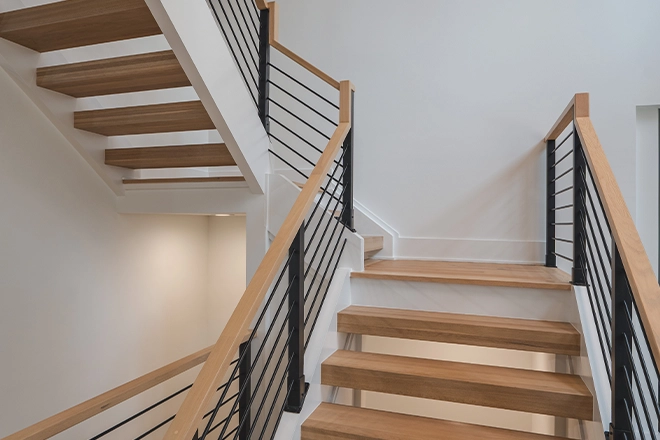
Floating staircases are self-supported staircases that appear to float in mid-air. They have a sleek, minimalist design with no visible support beneath the steps. A hidden stringer, often made of steel, glass, or other lightweight materials, supports the treads.
This stringer can be attached to the wall, floor, or ceiling. The treads are not connected to each other but are individually secured to the stringer.
Floating stairs are commonly used in modern, open spaces and can be installed indoors or outdoors. They pair well with various railing options such as glass, cable, or rod.
Their design creates more open space underneath, enhances natural light flow, and makes a room feel larger and more spacious.
Floating Stair Design and Materials
Floating staircases utilize a variety of materials to achieve their minimalist appearance.
Common materials include wood, glass, and metal, each adding a unique aesthetic and functional quality to the staircase.
- Wood treads offer a warm, classic look and are often made from high-quality wood species like red oak, which is durable and aesthetically pleasing.
- Glass elements in floating stairs create an illusion of more space and light, enhancing the openness of the room.
- Metal, particularly used in mono-stringer floating stairs, provides structural strength and a sleek modern line that is highly valued in newer homes.
Check out these floating stair design ideas.
Floating Stair Structural Mechanics
The backbone of floating staircases lies in their stringer system, which is typically hidden or minimalistically exposed. This system supports the treads without visible means, often using robust materials like steel to defy gravity.
The engineering behind these structures must be precise, ensuring that the staircases are not only visually appealing but also structurally sound. Each tread is carefully designed to withstand the daily foot traffic, aligning with the house’s architectural style while providing safety and durability.
Contact us about your staircase project.
What Are the Different Styles of Floating Stairs?
Floating staircases come in a variety of styles, each offering a unique aesthetic and structural approach. While all floating stairs share the defining feature of open risers, their design can differ significantly based on how the steps are supported and arranged.
The most common styles of floating staircases include:
- Straight Floating Stairs – The simplest and most linear design, ideal for modern, open-concept spaces.
- L-Shaped Floating Stairs – A right-angled variation that allows for space efficiency while maintaining a sleek appearance.
- U-Shaped Floating Stairs – Featuring a 180-degree turn, this style is great for compact layouts while still providing an open, airy feel.
- Winder Floating Stairs – A variation of L-shaped stairs that incorporates angled steps instead of a landing for a more fluid transition between levels.
- Spiral Floating Stairs – A space-saving, curved design that creates a striking visual centerpiece.
- Curved Floating Stairs – A sweeping, elegant design that offers a seamless flow, often used in high-end homes.
- Cantilevered Floating Stairs – A striking style where treads appear to extend directly from the wall, creating a truly “floating” illusion.
Each style brings its own character to a space, blending functionality with architectural beauty. Whether you’re aiming for a dramatic statement or a minimalist enhancement, there’s a floating staircase design to fit your home.
What Differentiates Floating Stair Types?
While all floating staircases share a visually light and open design, the details of their construction set them apart. The two primary elements that differentiate floating stair styles are:
The Position and Number of Stringers – The stair stringer is the structural backbone of the staircase. Some floating stairs use a mono-stringer, a single beam running beneath the center of the treads. Others feature double-stringer designs, with two beams positioned on either side. More advanced designs, like cantilevered stairs, integrate hidden supports within the wall itself.
The Directional Flow of the Staircase – Floating staircases can take various forms based on how they move through a space. Straight runs, turns, or curves determine the staircase’s look and functionality within the home’s layout.
Are Floating Stairs Safe?

Yes, floating staircases are just as safe as traditional stairs—when properly engineered and installed according to building code standards. While their open and minimalist design might appear less stable, a well-constructed floating staircase is structurally sound and fully secure.
To ensure the highest level of safety, stringent engineering principles are followed, including:
- Optimizing Tread Spacing for Safety – The gap between each tread is carefully controlled. This can be achieved with thicker treads, added steel lip supports, or integrated safety features like glass panels, cable railings, or mesh barriers.
- Strict Adherence to Building Codes – Every floating staircase is designed to meet local regulations regarding guardrail height, tread depth, riser spacing, and handrail dimensions.
- Engineered Structural Integrity – Staircases undergo rigorous structural analysis to ensure durability. The steel support system is critical for stability and the walking experience. A well-engineered staircase ensures that every step is firm and supportive.
- Hidden Support Systems for Cantilevered Stairs – The supporting hardware is often concealed within the walls for floating stairs with a cantilevered design. While these staircases appear weightless, they are anchored by precision-engineered steel frameworks. They are just as strong as conventional stairs.
Pros of Floating Stairs
The architectural choice of floating stairs is increasingly popular among modern home renovations and new residential projects. The design not only elevates the aesthetic but also integrates functional benefits that appeal to contemporary homeowners.
Aesthetic Appeal
Floating stairs are celebrated for their sleek, minimalistic design that adds a touch of elegance and sophistication to any home.
The clean lines and the illusion of floating treads create a focal point that draws the eye, offering a striking contrast to more traditional staircase designs. This design element is particularly effective in modern homes where simplicity and visual spaciousness are priorities.
Space Maximization
One of the primary benefits of floating staircases is their ability to make a space feel larger than it is.
By eliminating the need for bulky supporting structures, these staircases free up floor space, making them ideal for smaller homes or apartments where every square foot counts. This aspect is crucial in areas where mixed-use spaces are common and where homeowners are looking to maximize their usable area.
Improved Natural Light Flow
The open design of floating stairs allows light to flow freely between floors, enhancing the natural brightness of a home.
This can reduce the need for artificial lighting during the day and create a more inviting atmosphere. In neighborhoods with significant tree coverage, maximizing natural light can make a substantial difference in the feel of a home’s interior.
Modern Look
Floating staircases lend a contemporary feel that can seamlessly match the architectural style of newly constructed homes or renovations.
They reflect a modern sensibility that many homeowners seek, characterized by streamlined forms and an emphasis on light and space.
Here’s what else to know about modern stairs.
Cons of Floating Stairs
While floating stairs offer many advantages, there are also several drawbacks to consider before incorporating them into your home.
Safety Risks
The open risers of floating staircases can pose safety risks, particularly for homes with small children or elderly residents.
The lack of a back on each step can lead to slips or falls if not carefully monitored. This factor is a significant consideration for families evaluating the practicality of integrating such a design into their homes.
You need to be sure your contractor follows the correct staircase remodeling safety tips.
Cost Implications
Floating staircases typically involve higher costs for materials and installation compared to traditional stairs.
The need for specialized hardware and the precision required in the construction process can drive up the project budget, which is an essential factor for many homeowners to consider.
Complex Installation
The installation of floating stairs is not a straightforward task.
It requires detailed planning and precision engineering to ensure that the stairs are safe and stable. This complexity means that homeowners will likely need to hire specialized contractors experienced in installing floating staircases, adding to the overall cost and timeline of the project.
Floating Stair Maintenance Challenges
Maintaining floating stairs can be more demanding than traditional stairs.
The materials used, such as glass or specialized wood species, often require regular cleaning and can be more susceptible to wear and tear. For busy families, the additional maintenance required can be a deterrent.
Installation Insights for Floating Staircases
Understanding the installation process of floating stairs can significantly influence the decision-making process, particularly for those undergoing home renovations or involved in new residential projects.
Preparing for Floating Stair Installation
The installation of floating stairs is a complex process that requires meticulous preparation.
Before the actual installation begins, it’s essential to have all the necessary hardware and detailed plans in place. This preparation involves measuring the space, ensuring the integrity of the walls that will anchor the stairs, and confirming that all materials match the homeowner’s style and the home’s interior design.
Floating Staircase Installation Process
The installation of floating stairs must be handled by professionals who specialize in this type of staircase.
The process involves several critical steps: setting up the stringers, securing the stair treads, and ensuring all elements are perfectly aligned and secure. The use of specialized tools and techniques is necessary to create the seamless appearance of floating stairs. While the installation is harder than with a traditional staircase design, the transformative effect these stairs can have on a space is often worth the effort.
Discover more about floating stairs vs. traditional stairs.
FAQs About Floating Staircases
How much does it cost to build floating stairs?
Floating stairs cost between $15,000 and $100,000, with most homeowners spending $20,000 to $30,000 per flight with railings. Prices vary based on materials, customization, and engineering complexity. Features like integrated lighting or custom finishes can increase costs.
Are floating stairs worth it?
Floating stairs offer a modern, open design that makes spaces feel larger and can boost home value. While they are more expensive and require precise installation, their sleek aesthetic and architectural appeal make them a worthwhile investment for those seeking a contemporary look.
Step Up Your Style With Stair Creations
At Stair Creations, we understand that every step in your Virginia home should reflect your unique style and needs. Our expertise in floating staircase installations ensures that your next home renovation will not only meet but exceed your expectations.
Don’t let another step go by without the staircase of your dreams. Fill out our contact form today, or give us a call to start your journey to a more stylish and functional home with Stair Creations.