Acclimation is the part of a hardwood install that quietly decides whether your floor lays flat for fifty years or starts cupping by month three. Skip it, rush it, or do it in the wrong room, and you’ve got an expensive problem. Do it right, and the rest of the install is just carpentry.
Deliver the wood to the actual room where it will live, hold that room at normal living conditions (60 to 80 degrees Fahrenheit, 30 to 50 percent relative humidity) for 3 to 5 days for engineered hardwood and 7 to 14 days for solid hardwood, then verify with a moisture meter that the boards and subfloor are within 2 to 4 percent of each other before driving a single nail.
What Acclimation Actually Does
Wood absorbs and releases moisture from the surrounding air. The amount it holds at any given moment, called moisture content, is measured as a percentage of the wood’s weight. When wood reaches a stable balance with its environment, it sits at equilibrium moisture content (EMC).
The USDA Forest Service’s Wood Handbook, the definitive reference on wood moisture published by the Forest Products Laboratory, maps out how moisture content shifts with temperature and humidity. Wood always wants to match its surroundings; acclimation lets that balance happen before the boards are locked into a subfloor.
Without it, boards swell or shrink in place, and you end up with cupping, crowning, gaps, buckling, or adhesive failure. None of those problems get covered under most flooring manufacturer warranties.
Set the Room First
Acclimation works only if the room is ready. Wood sitting in a freshly framed addition with no HVAC is in storage. The acclimation clock only starts when the room hits real living conditions.
Before the flooring arrives:
- HVAC running at 60 to 80 degrees Fahrenheit.
- Relative humidity between 30 and 50 percent, the same range that protects wood through every season.
- Subfloor moisture below 12 percent for plywood and 4 percent or lower for concrete.
- All wet trades finished, with drywall, paint, and tile fully dried, usually 7 days minimum before the wood arrives.
For new construction, give the building a full week of consistent climate control before the wood enters.
Open the Boxes, Cross Stack the Boards
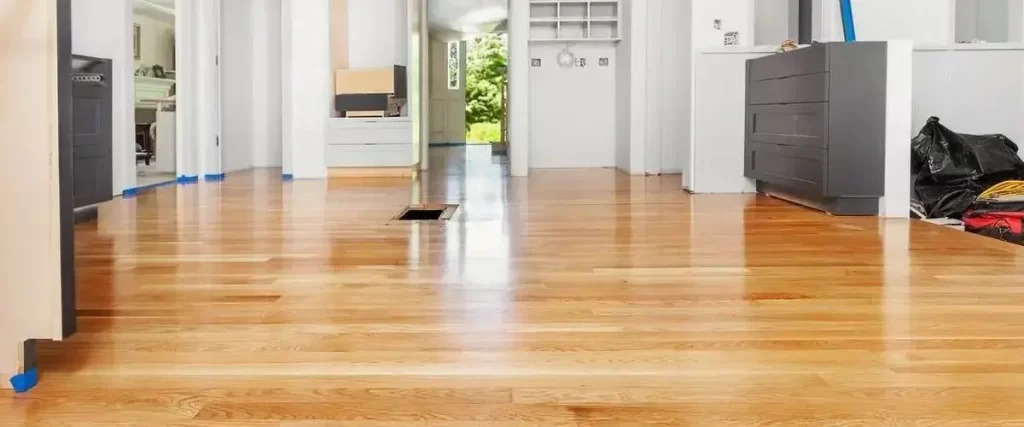
Leaving flooring sealed in inner plastic wrapping defeats acclimation entirely. Boards cannot exchange moisture with the room if they’re hermetically sealed. To do it right:
- Open every carton and break the inner plastic wrapping or fold back the cardboard flap.
- Cross stack the planks in loose layers with small wood blocks between each layer to allow air circulation around every board.
- Keep stacks at least 4 inches off the floor and away from exterior walls, vents, and direct sunlight.
- Spread bundles across the room rather than piling everything in one corner.
Engineered hardwood flooring is more dimensionally stable thanks to its layered construction, so it usually needs less time than solid strip flooring.
How Long Does It Actually Take
Manufacturer instructions vary, so always read them first. The general guideline:
| Flooring Type | Typical Acclimation Time |
| Engineered hardwood | 3 to 5 days |
| Solid strip flooring (under 4 inch) | 7 to 10 days |
| Wide plank solid hardwood (4 inch and up) | 10 to 14+ days |
| Reclaimed or exotic species | 14+ days, verify with a meter |
Time provides a guideline. The moisture meter provides the verdict.
Verify With a Moisture Meter
A pinless moisture meter is the tool that turns guesswork into a finished decision. Take readings on at least 20 boards across multiple cartons, plus several spots on the subfloor. The numbers you want:
- Subfloor: below 12 percent for wood, 4 percent or lower for concrete.
- Wood flooring: within 2 to 4 percent of the subfloor reading.
If your readings sit outside that window, give the boards more time. Verify everything with the meter before driving the first nail.
For a closer look at how moisture interacts with installed floors over the seasons, our breakdown of solid vs engineered hardwood walks through which format handles humidity swings best.
Common Mistakes That Ruin Floors
A few things we see go wrong on DIY projects:
- Skipping the meter. “It’s been a week, must be ready.” Maybe.
- Wrong room. Acclimating in a garage when the floor is going on the second story.
- HVAC off. Acclimation during a power outage week or before utilities are turned on.
- Wrapped boards. Sealed cartons leaning against the wall for ten days do nothing.
- Rushing wide planks. A 7 inch white oak plank needs more time and tighter tolerances than a 3 inch strip.
If you want to know which species handles seasonal swings best before you buy, our guide to the best types of wood flooring covers the practical differences that matter for acclimation.
FAQ
Can I acclimate hardwood in the garage?
No. Garages have wildly different temperature and humidity than living spaces, and the wood will balance for the wrong environment.
What if I skip acclimation entirely?
You’ll likely see cupping, gaps, or buckling within a few seasons. Most manufacturer warranties become void without proof of proper acclimation.
Does prefinished flooring still need to acclimate?
Yes. The factory finish protects the surface; the wood underneath still moves with humidity.
Is acclimation different in winter versus summer?
Targets stay the same (60 to 80 degrees, 30 to 50 percent humidity). Hitting them in winter usually requires a humidifier; in summer, a dehumidifier or air conditioning.
Save the Weekend, Hand It Over
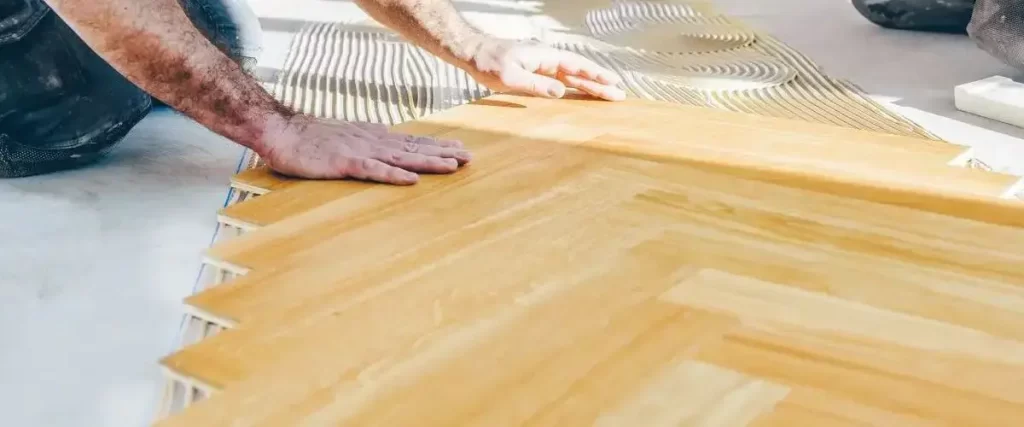
You can buy a moisture meter, run a humidifier, learn EMC charts, time deliveries to subfloor readings, and cross stack boards across three rooms for two weeks. Or you can call us. We handle the moisture testing, room prep, acclimation timing, and the install itself, meter in hand and warranty intact. Boards lay flat the day we finish, and stay that way through every season after, so you can forget about the floor and just enjoy living on it.
Ready to hand it off? Call us at (703) 902-0009 or message us here for hardwood flooring installation handled by people who genuinely want your floor to last as long as you live there.