Keep Your Staircase Standing Tall
Are you ready to breathe new life into the staircase of your historic home? Curious about how to restore both beauty and safety to a stairway that has seen better days?
In this post, we’ll walk through a detailed process to help you tackle stair restoration with confidence.
By the end of this guide, you’ll have everything you need to give your staircase a stunning, historically accurate makeover that’s safe and long-lasting.
Quick Guide To Historic Stair Restoration
- Assess the Condition of the Staircase
- Research the Historical Design
- Choose Restoration vs. Replacement
- Perform Structural Repairs
- Restore Decorative Elements
- Sand and Refinish
- Add Final Touches
- Conduct Regular Maintenance
1. Assess The Condition Of The Staircase
Before you begin your staircase restoration project, it’s crucial to assess the current condition of your old staircase.
The stairs may have sustained years of wear and tear in many old houses in Fairfax, VA.
Look for loose stair treads, damaged risers, or warped wood. Pay close attention to any creaks or signs of instability, especially in high-traffic areas.
Once you’ve identified the issues, you can better decide what the restoration project will involve.
Structural Integrity
The most important factor to evaluate is the structural integrity of the stairs.
Are the stair treads sagging or creaking? Are there loose spindles or handrails? These will need immediate attention to ensure safety.
Material Condition
Look for damage to the wood. Hardwood stairs are common in historic homes and may show signs of age, such as rot or worn areas.
Also, check for any rusted nails or split boards.
If your home has carpeted stairs, see if there are signs of wear, even if it’s dirty carpet that needs to be removed.
Aesthetic Features
Pay attention to decorative elements like woodwork and spindles that give character to your staircase. Even if these elements are worn, they can often be refinished or restored to their original beauty with some hard work.
2. Research The Historical Design
Understanding the historical context of your staircase is essential for maintaining historical accuracy during the restoration.
Each restoration project should aim to preserve or mimic the original style of the house as closely as possible.
Look at old photos or drawings of the house or consult local historical records. You may find design clues in decor elements around the stairs, like trim, ceilings, or adjacent flooring.
If you’re not sure about the design ideas, consider consulting a historic preservation expert. This can ensure your restoration project stays true to the home’s period.
3. Choose Staircase Restoration Vs. Replacement
Once you’ve assessed the condition of your staircase and researched its design, the next step is to decide whether to restore the existing materials or replace damaged sections.
Restoring
In most cases, it’s best to preserve as much of the original wood as possible.
Sanding and refinishing are common ways to bring back the original beauty of your wooden staircases. For example, hardwood stairs can often be sanded down and stained to look like new.
Use wood filler for cracks and gaps, but avoid covering up the historical details.
Replacing
If the damage is too extensive, you may need to replace parts of the stairs, such as rotted stair treads or broken spindles.
When possible, use reclaimed or custom-milled wood to match the original materials. This helps the staircase restoration blend seamlessly with the home’s existing woodwork.
4. Perform Structural Repairs
With your staircase restoration project underway, structural repairs should be the top priority. Address any unsafe elements of the staircase before moving on to the aesthetic aspects.
If the stair treads or risers are weak or damaged, they should be reinforced or replaced. You can fill cracks and gaps with wood filler.
Loose balusters and handrails pose a safety hazard. Reinforce or replace them with timber that matches the original wood used in the staircase.
Here’s our guide covering how to replace balusters.
5. Restore Decorative Elements
Many historic staircases are home to beautiful decorative elements. Restoring these pieces will help bring back the original beauty of the staircase and add value to your project.
If parts like carved spindles or intricate moldings are missing, work with a craftsman to reproduce them accurately.
Use sanding, staining, and varnishing techniques that complement the original design of the wooden staircases.
6. Sanding And Refinishing
Once the structural work is done, it’s time to focus on the refinishing phase of the staircase restoration. This is where the stairs will start to look like they’ve been brought back to life.
Begin by thoroughly sanding the stairs. Removing old layers of paint or stain will help reveal the fresh wood underneath.
Be prepared for a lot of sawdust!
After sanding, apply a stain that enhances the natural color of the wood.
Once the stain has dried, use a protective coat of sealant or varnish to lock in the color and protect the surface from future wear.
7. Add Final Touches
The final touches are what bring the whole staircase restoration project together. This step is all about making the stairs feel complete and harmonious with the rest of the house.
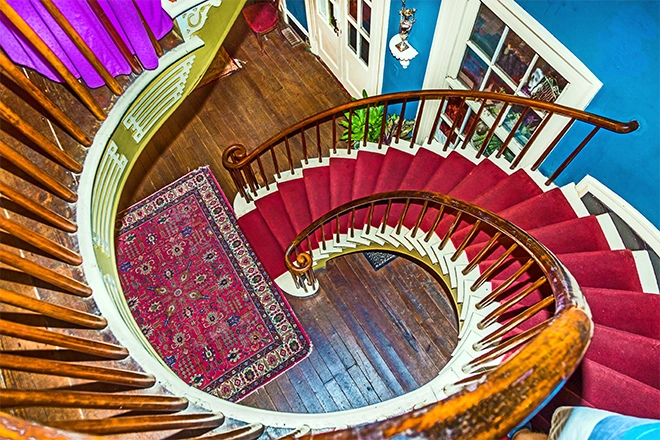
If the home had old carpeted stairs, you might want to replace the carpet with new, historically appropriate carpeting. You can also consider leaving the stairs bare to show off the beautiful wood.
Adding lighting fixtures and small decor details that match the home’s period can give your restored staircase a polished, authentic look.
8. Regular Maintenance
Once your staircase restoration is complete, regular maintenance will help preserve its beauty for years to come. Whether you’ve chosen carpeted stairs or bare wood, keep your stairs clean and inspect them regularly for signs of wear or damage. In high-traffic areas, consider applying a fresh coat of sealant or stain every few years to keep your wood looking its best.
Restore Your Stairs With Stair Creations
At Stair Creations, we specialize in transforming old staircases into stunning focal points that blend historic beauty with modern functionality. Whether you’re looking for a full remodel or just a touch of restoration, our expert team will bring your vision to life with craftsmanship you can trust.
Ready to elevate your home’s staircase? Fill out our contact form today or give us a call, and let Stair Creations guide you through your stair restoration journey.