Rungs or Rails? Understanding Stair Railing Safety Before You Build
Are horizontal railings actually safe for a staircase, or do they create a climbing hazard for kids?
Should you choose vertical balusters or horizontal cable railings when designing a new railing system?
In this guide, you will learn how horizontal vs. vertical railing safety works, what building codes require, and how different railing systems affect safety and design.
By the end, you will understand how to choose a railing orientation that keeps your stairs safe while matching the look and feel you want in your home.
Are Horizontal or Vertical Stair Railings Safer?
Horizontal and vertical railing systems can both meet safety standards when they follow building code requirements. The direction of the rails does not determine safety on its own.
Instead, safety depends on guard height, opening size, structural strength, and proper installation.
Many homeowners assume that horizontal railings are unsafe because of the ladder effect, but modern codes focus on measurable safety standards instead of banning a particular orientation.
Whether you choose horizontal or vertical orientation, your railing must meet the same safety requirements.
Here are the main safety factors used in building codes:
- Guard height for residential stair guards is typically at least 36 inches above the walking surface.
- Commercial guards are usually required to reach about 42 inches.
- Handrails commonly sit between 34 and 38 inches above stair tread nosings.
- Openings in railing systems must generally prevent a 4-inch sphere from passing through.
- On stairs, slightly larger openings may be allowed between angled elements.
- The triangular opening between the bottom rail and tread may allow a larger sphere.
- The top rail must withstand a concentrated load of about 200 pounds.
- Guard infill must resist about 50 pounds of force applied across a small area.
These requirements apply equally to horizontal and vertical railing systems. The code does not favor one orientation over the other as long as the railing meets the required safety measurements.
Understanding the Ladder Effect in Horizontal Railings
What the Ladder Effect Means
The ladder effect refers to the idea that horizontal members in a railing could act like ladder rungs.
When cables run horizontally or bars are arranged horizontally, children may try to climb them.
Because of this possibility, horizontal railings sometimes raise concerns among homeowners with small children. The thinking is simple: if the railing looks like a ladder, kids might try climbing it.
This does not mean horizontal railings are automatically unsafe. It simply means the design may allow easier climbing than rigid vertical balusters.
Why the Ladder Effect Became a Concern
The ladder effect first became a topic in building code discussions during the 1990s.
Some building officials believed horizontal guard infill could encourage climbing by young children.
Because of that concern, early versions of building codes included language discouraging railing systems that resembled ladder rungs.
However, those rules did not stay in place for long.
Building Code History and Changes
Early Code Restrictions
When the International Residential Code first appeared around 2000, it included language addressing the ladder effect.
The goal was to prevent horizontal infill patterns that could act like climbing ladders.
These early restrictions were based largely on caution rather than clear injury data.
Removal of Ladder Effect Restrictions
In 2001, the International Code Council reviewed the evidence and removed the ladder-effect language from the model code.
The decision came after officials determined there was insufficient data linking horizontal railings to increased injuries among kids.
Since then, the International Residential Code and the International Building Code have focused on measurable safety requirements such as guard height, opening size, and structural loads.
Today, the model code does not prohibit horizontal cable railing or horizontal infill designs. Instead, railing systems must meet performance standards regardless of orientation.
How Modern Building Codes Evaluate Stair Railings
Guard Height Requirements
Guard height requirements, such as recommended stair railing height, ensure that the railing is tall enough to provide fall protection along stairs and decks.
For residential stairs and decks, the guard height is typically required to be at least 36 inches above the walking surface. In many commercial settings, the guard height increases to around 42 inches.
These measurements help prevent falls while maintaining a consistent height standard across railing systems.
Handrail Height Requirements
Handrails are measured from the stair tread nosings and are usually 34 to 38 inches above the stair surface.
This height range allows people to grip the rail comfortably while climbing or descending stairs.
Opening Size Requirements
Opening size rules help prevent small children from slipping through the openings in railing systems.
Most codes require that the space between railing components must not allow a 4-inch sphere to pass through.
On stairs, slightly larger openings may be allowed between angled elements. The triangular opening between the stair tread and the bottom rail can also be larger.
These measurements apply whether the railing uses vertical balusters, horizontal cable infill, or other materials, such as tempered glass.
Structural Load Requirements
Beyond spacing and height rules, railings must also be strong enough to handle pressure.
The top rail must resist a concentrated load of about 200 pounds applied in any direction.
Guard infill must also resist about 50 pounds of force applied over a small surface area. This requirement ensures that cables, bars, or glass panels do not fail under pressure.
Safety Characteristics of Horizontal Stair Railings
Visibility and Open Sightlines
One of the biggest advantages of horizontal cable railings is visibility.
Because cables run horizontally and create minimal visual obstruction, they allow sweeping views across the space.
Many homeowners choose this style because it makes staircases feel more open.
Horizontal railings also create clean lines that complement modern design. In open floor plans, this orientation helps the staircase blend naturally with the surrounding architecture.
Potential Climbing Concerns
The main safety concern with horizontal orientation is the risk of climbing.
Young children may treat horizontal members like ladder rungs. If kids attempt to climb, the railing may provide footholds that make it easier to reach higher.
That does not mean horizontal cable railing is unsafe, but it is something families should consider when choosing between vertical and horizontal orientations.
Structural Performance
A properly designed cable system can meet all safety code requirements.
Horizontal cable railings rely on correct cable tension, proper post spacing, and strong structural posts. Many systems use 10 to 13 cables, or even 13, depending on guard height and spacing.
Posts must also be installed carefully to avoid notching structural posts, which could weaken the railing.
For longer spans, intermediate braces and corner posts may be added to support the cables and maintain low stretch under load.
Safety Characteristics of Vertical Stair Railings
Reduced Climbability
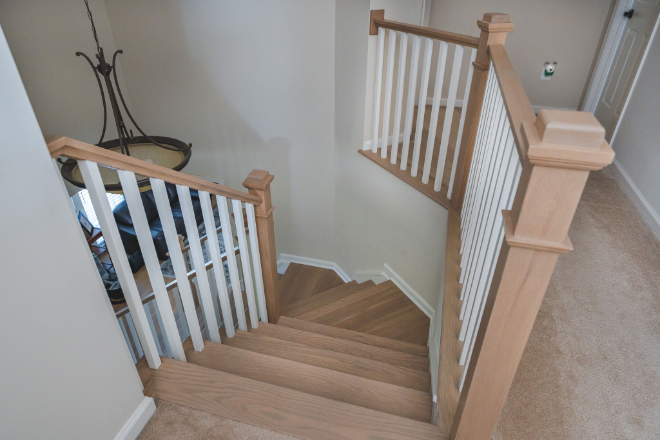
Vertical balusters are often considered safer for households with young children.
Because vertical elements do not create ladder-like steps, kids have fewer footholds for climbing.
Rigid vertical balusters are often used in traditional railing systems for this reason.
Traditional Safety Approach
Vertical railing designs have been used for decades in homes and public buildings.
They are widely recognized and familiar, which is one reason many jurisdictions and local amendments still encourage them for stair guards.
Many homeowners feel more comfortable choosing vertical balusters simply because they appear less climbable.
Visual Density
The main trade-off with vertical railing is visibility.
Vertical balusters can visually break up the space more than horizontal cable railings. Instead of open sightlines, the eye sees a repeating pattern of vertical bars.
Some homeowners prefer this look, especially in traditional homes where wood railings and vertical balusters complement the architecture.
Installation and Structural Considerations
Installation Complexity
The installation process can vary depending on the railing system and materials used.
Cable railing systems often use multiple horizontal cables tensioned between posts, and understanding the cable railing cost per foot helps homeowners plan a modern, open railing design.
Horizontal cable railings often require additional planning because the cables must remain tight across longer spans.
Deck posts, corner posts, and intermediate braces all contribute to supporting the system.
Stair Creations offers custom stair and railing solutions, and we work with you during on-site consultations to review design options, materials, and layout so your railing system fits both the structure of your staircase and the overall look of your home.
Contact us, and we’ll guide you through finding the perfect railings for your staircase!
Importance of Professional Installation
Professional installation helps ensure railing systems meet structural and code requirements.
A properly installed cable system must handle load forces, maintain correct spacing, and remain secure over time.
Experienced contractors also understand how to position structural posts, avoid notching them, and maintain the correct guard height throughout the railing.
Stair Creations handles stair railing installation, material selection, and design coordination so you can move forward with a system that meets code requirements while matching your home’s style.
Design and Style Considerations for Stair Railings
Many homeowners use the terms railing and banister interchangeably, but understanding the difference between the two clarifies staircase terminology.
Modern and Contemporary Styles
Horizontal railings are often associated with modern design.
The horizontal orientation creates clean lines and minimal visual clutter. Cable infill systems and tempered glass panels are commonly used in these designs to create an open look.
Many homeowners choose horizontal cable railings when they want sweeping views across the space and a staircase that feels lighter and more modern.
Traditional Architectural Styles
Vertical railing systems are more commonly used in traditional homes.
Wood railings paired with rigid vertical balusters create a classic look that complements many interior styles.
This design also tends to feel more enclosed and structured, which some homeowners prefer.
Visual Impact on Interior Spaces
The orientation of your railing has a large effect on how the staircase feels inside the home.
Horizontal and vertical railing systems shape how light moves through the space and how open the area feels.
For example, homes surrounded by tall trees or outdoor scenery often use cable railing to preserve visibility through large windows and stair openings.
Stair Creations specializes in custom stair design and railing upgrades, helping you choose materials, finishes, and railing layouts that complement your home’s architecture while creating a staircase that becomes a focal point of the space.
Safer Stairs Start with the Right Railing Design — Stair Creations
Choosing between horizontal and vertical railing systems comes down to balancing safety, building code requirements, and the design style you want for your staircase.
Stair Creations designs and installs custom stair railings, helping you choose materials, layouts, and railing systems that meet code requirements while creating a staircase that enhances the look and function of your home.
If you are planning a stair renovation or installing a new railing system, the right design can improve both safety and the overall feel of your space. Fill out our contact form today or give us a call.